AI News and Guides

Explore the best AI News and Guides — independent reviews, comparisons, pricing and step-by-step how-to guides, curated by Aizhi.

  • T Layout

    T Layout

    The T-Layout is an architectural and design concept for web applications, specifically tailored to improve the user experience on mobile devices. It features a horizontally scrollable container divided into three distinct sections, each spanning the full width of the screen, and was developed to optimise space usage and streamline navigation. == Background == The T-Layout introduces horizontal scrolling as a complementary method to the conventional pop-up-based navigation system in mobile web applications. In this layout, the central section which is visible by default upon accessing the application, facilitates the main content of a URL address and is flanked by two "helper" sections. This approach minimises the need for extensive user movements, in order to reach navigation controls typically located at the top of the screen. It is aimed at enhancing the user experience on mobile devices by providing an easier way to access essential content such as the main navigation, e-commerce related screens, or user account related information, ensuring that those elements are readily accessible while requiring minimal user effort. The T-Layout was first implemented by E (e-streetwear.com) in their mobile web app layout, and it was inspired by the interfaces of well-tested native mobile apps like Instagram and Revolut. A study titled "Mobile Navigation and User Preferences Survey" indicated a preference among mobile app users for one-handed usage, primarily navigating with their thumb. These insights led to the T-Layout Experiment, which compared the efficiency of using swipe gestures to access navigational elements against reaching traditional navigation controls. == Development history == It was first released as the mobile layout of E in early 2023. It was originally developed based on six principles: user-centric functionality, lightweight filesize, HTML and CSS implementation with minimal or no use of JavaScript required, suitable both for browser and server-rendering architectures, intuitive design, and improved SEO. The development of the T-Layout was driven by the necessity for more ergonomic and user-friendly interfaces in mobile web applications. Its design, reminiscent of the letter 'T', emerged as a solution to several usability challenges mobile device users face, emphasising ease of access and efficient screen space utilisation. In July 2023, E formalised the concept and its technical specifications, introducing it to the web design and development community. In October 2023 the "Mobile Navigation and User Preferences Survey" was conducted, establishing that the vast majority of individuals prefer to use mobile applications by holding the phone in a one-handed grip, utilising only the thumb for gestures when possible. The subsequent "T-Layout Experiment", designed to measure the time in seconds and the distance (user effort) in pixels, required to access navigational elements by traditionally tapping on fixed-positioned controls compared to swiping anywhere on the screen. The results proved that swipe gestures require less time and much less effort. == Styling and features == The main characteristic of the T-Layout is its horizontal scrolling feature, which can improve navigation efficiency while preserving the functionality of traditionally structured user interfaces. Its Implementation can be achieved with a combination of HTML and styling with CSS as well as precompiled Scss and Sass, CSS-in-JS, and styled JSX. It can be either a purely HTML/CSS solution but JavaScript can be utilised as well to add more specific functionalities, while It can be implemented to both existing and new applications. Its application in server-side rendering architectures will ensure that all its underlying principles apply. Although principally each section in the layout has a distinct role and facilitates specific types of content, the T-Layout as a concept is versatile, and it is adaptable allowing modifications in the layout or how it's implemented to cater to the specific needs of different applications.

    Read more →
  • BL (logic)

    BL (logic)

    In mathematical logic, basic fuzzy logic (or shortly BL), the logic of the continuous t-norms, is one of the t-norm fuzzy logics. It belongs to the broader class of substructural logics, or logics of residuated lattices; it extends the logic MTL of all left-continuous t-norms. == Syntax == === Language === The language of the propositional logic BL consists of countably many propositional variables and the following primitive logical connectives: Implication → {\displaystyle \rightarrow } (binary) Strong conjunction ⊗ {\displaystyle \otimes } (binary). The sign & is a more traditional notation for strong conjunction in the literature on fuzzy logic, while the notation ⊗ {\displaystyle \otimes } follows the tradition of substructural logics. Bottom ⊥ {\displaystyle \bot } (nullary — a propositional constant); 0 {\displaystyle 0} or 0 ¯ {\displaystyle {\overline {0}}} are common alternative signs and zero a common alternative name for the propositional constant (as the constants bottom and zero of substructural logics coincide in MTL). The following are the most common defined logical connectives: Weak conjunction ∧ {\displaystyle \wedge } (binary), also called lattice conjunction (as it is always realized by the lattice operation of meet in algebraic semantics). Unlike MTL and weaker substructural logics, weak conjunction is definable in BL as A ∧ B ≡ A ⊗ ( A → B ) {\displaystyle A\wedge B\equiv A\otimes (A\rightarrow B)} Negation ¬ {\displaystyle \neg } (unary), defined as ¬ A ≡ A → ⊥ {\displaystyle \neg A\equiv A\rightarrow \bot } Equivalence ↔ {\displaystyle \leftrightarrow } (binary), defined as A ↔ B ≡ ( A → B ) ∧ ( B → A ) {\displaystyle A\leftrightarrow B\equiv (A\rightarrow B)\wedge (B\rightarrow A)} As in MTL, the definition is equivalent to ( A → B ) ⊗ ( B → A ) . {\displaystyle (A\rightarrow B)\otimes (B\rightarrow A).} (Weak) disjunction ∨ {\displaystyle \vee } (binary), also called lattice disjunction (as it is always realized by the lattice operation of join in algebraic semantics), defined as A ∨ B ≡ ( ( A → B ) → B ) ∧ ( ( B → A ) → A ) {\displaystyle A\vee B\equiv ((A\rightarrow B)\rightarrow B)\wedge ((B\rightarrow A)\rightarrow A)} Top ⊤ {\displaystyle \top } (nullary), also called one and denoted by 1 {\displaystyle 1} or 1 ¯ {\displaystyle {\overline {1}}} (as the constants top and zero of substructural logics coincide in MTL), defined as ⊤ ≡ ⊥ → ⊥ {\displaystyle \top \equiv \bot \rightarrow \bot } Well-formed formulae of BL are defined as usual in propositional logics. In order to save parentheses, it is common to use the following order of precedence: Unary connectives (bind most closely) Binary connectives other than implication and equivalence Implication and equivalence (bind most loosely) === Axioms === A Hilbert-style deduction system for BL has been introduced by Petr Hájek (1998). Its single derivation rule is modus ponens: from A {\displaystyle A} and A → B {\displaystyle A\rightarrow B} derive B . {\displaystyle B.} The following are its axiom schemata: ( B L 1 ) : ( A → B ) → ( ( B → C ) → ( A → C ) ) ( B L 2 ) : A ⊗ B → A ( B L 3 ) : A ⊗ B → B ⊗ A ( B L 4 ) : A ⊗ ( A → B ) → B ⊗ ( B → A ) ( B L 5 a ) : ( A → ( B → C ) ) → ( A ⊗ B → C ) ( B L 5 b ) : ( A ⊗ B → C ) → ( A → ( B → C ) ) ( B L 6 ) : ( ( A → B ) → C ) → ( ( ( B → A ) → C ) → C ) ( B L 7 ) : ⊥ → A {\displaystyle {\begin{array}{ll}{\rm {(BL1)}}\colon &(A\rightarrow B)\rightarrow ((B\rightarrow C)\rightarrow (A\rightarrow C))\\{\rm {(BL2)}}\colon &A\otimes B\rightarrow A\\{\rm {(BL3)}}\colon &A\otimes B\rightarrow B\otimes A\\{\rm {(BL4)}}\colon &A\otimes (A\rightarrow B)\rightarrow B\otimes (B\rightarrow A)\\{\rm {(BL5a)}}\colon &(A\rightarrow (B\rightarrow C))\rightarrow (A\otimes B\rightarrow C)\\{\rm {(BL5b)}}\colon &(A\otimes B\rightarrow C)\rightarrow (A\rightarrow (B\rightarrow C))\\{\rm {(BL6)}}\colon &((A\rightarrow B)\rightarrow C)\rightarrow (((B\rightarrow A)\rightarrow C)\rightarrow C)\\{\rm {(BL7)}}\colon &\bot \rightarrow A\end{array}}} The axioms (BL2) and (BL3) of the original axiomatic system were shown to be redundant (Chvalovský, 2012) and (Cintula, 2005). All the other axioms were shown to be independent (Chvalovský, 2012). == Semantics == Like in other propositional t-norm fuzzy logics, algebraic semantics is predominantly used for BL, with three main classes of algebras with respect to which the logic is complete: General semantics, formed of all BL-algebras — that is, all algebras for which the logic is sound Linear semantics, formed of all linear BL-algebras — that is, all BL-algebras whose lattice order is linear Standard semantics, formed of all standard BL-algebras — that is, all BL-algebras whose lattice reduct is the real unit interval [0, 1] with the usual order; they are uniquely determined by the function that interprets strong conjunction, which can be any continuous t-norm.

    Read more →
  • Jake Elwes

    Jake Elwes

    Jake Elwes () is a British media artist, hacker and researcher. Their practice is the exploration of artificial intelligence (AI), queer theory and technical biases. They are known for using AI to create art in mediums such as video, performance and installation. Elwes considers themselves to be neuroqueer, and their work on queering technology addresses issues caused by the normative biases of artificial intelligence. == Education and early life == Elwes was born in London to British contemporary artist and painter Luke Elwes and Anneke, daughter of Hans Dumoulin. Elwes is the great grandchild of Army officer James Hennessy and portrait painter Simon Elwes RA, son of Victorian opera singer Gervase Elwes. Elwes studied at the Slade School of Fine Art from 2013 to 2017, where they began using computer code as a medium. In 2016 they attended the School of Machines, Making & Make-Believe in Berlin with artist and educator Gene Kogan. Elwes was introduced to drag performance by their collaborator Dr Joe Parslow who holds a PhD in drag performance. Drag performance has since become instrumental to Elwes' work. == Career == Elwes' work with artificial intelligence is cited as a hopeful strategy to make AI more playful and diverse. Elwes' work has been exhibited in numerous international art museums and galleries and was featured in a BBC documentary on the history of video art, they were a 2021 finalist for the Lumen Prize, and received the Honorary Mention of the 2022 Prix Ars Electronica in the Interactive Art + category. They also curated and presented the opening provocation "The New Real - Artistic and Queer Visions of AI Futures" to the UK government with two drag artists at the AI UK conference 2024. Elwes is part of the Radical Faeries countercultural movement. They have exhibited in museums and galleries across Europe and Asia including: Victoria and Albert Museum (London, UK) - The Zizi Show (2023-2024) for the first digital commission in their photography center's digital gallery Pinakothek der Moderne (Munich, Germany) - Glitch. Die Kunst Der Störung (2023-2024) ZKM (Karlsruhe, Germany) - Biomedia (2021-2022) National Museum of Modern and Contemporary Art (Cheongju, South Korea) - What an Artificial World (2024) Somerset House (London, UK) - The Horror Show! (2022-2023) Gazelli Art House (London, UK) - Jake Elwes: Data • Glitch • Utopia (2023) (survey exhibition) Jut Art Museum (Taipei, Taiwan) - Future Lives, Future You (2023-2024) Max Ernst Museum (Brühl, Germany) - Surreal Futures (2023-2024) Zabludowicz Collection (London, UK) - Among the Machines (2022) Ars Electronica (Linz, Austria) - Prix Ars Electronica, CyberArts Exhibition (2022) Institute of Contemporary Arts (ICA) (London, UK) - Do Androids Dream on Silver Screens? (2023) Arebyte gallery (London, UK) - Real-Time Constraints (2020) Ming Contemporary Art Museum (McaM) (Shanghai, China) - Mind the Deep (2019) HMKV (Hartware MedienKunstVerein) (Dortmund, Germany) - House of Mirrors: Artificial Intelligence as Phantasm (2022) Today Art Museum (Beijing, China) - Future of Today: DEJA VU (2019) Science Gallery (Dublin, Ireland) - BIAS (2021-2022) Yuz Museum (Shanghai, China) - Lying Sophia and Mocking Alexa (2021) Fotomuseum Winterthur The Onassis Foundation (Athens, Greece) - You and AI (2021) Royal College of Art (London, UK) - Event Two (2019) (50th anniversary of Computer Arts Society & Event One) Museum für Naturkunde (Berlin, Germany) - Forschungsfall Nachtigall (2019) Frankfurter Kunstverein (Frankfurt, Germany) - I am here to learn (2018) Nature Morte (Delhi, India) - Gradient Descent (2018) BALTIC Centre for Contemporary Art (Newcastle, UK) - Bloomberg New Contemporaries (2017) == Artworks == === The Zizi Project - a deepfake drag cabaret === The Zizi Project is a series of works that explore the interaction of drag and A.I. Currently, The Zizi Project is made up of multiple artworks. ==== Zizi - Queering the Dataset (2019) ==== Knowing that facial recognition technology statically struggle to recognize black women or transgender people, Elwes set out to "Queer the Dataset" through an open-sourced generative adversarial network (GAN, a type of machine learning model and an early Generative artificial intelligence). Elwes added a dataset of 1,000 photos of drag kings and queens into the GAN's 70,000 faces collected in a standardised facial recognition dataset called Flickr-Faces-HQ Dataset (FFHQ). They then created new simulacra faces, known as deep fakes. "We queer that data so it shifts all of the weights in this neural network from a space of normativity into a space of queerness and otherness. Suddenly all of the faces start to break down and you see mascara dissolve into lipstick and blue eye shadow turn into a pink wig" said Elwes in a 2023 interview for Artnet. ==== Zizi & Me (2020–2023) ==== Zizi & Me is an ongoing multimedia collaboration between drag queen Me The Drag Queen and a deepfake A.I. clone of Me The Drag Queen. Using neural networks trained on filmed footage, the project creates a virtual body that can mimic reference movements. The first act, which features a digital lip-sync duet to Anything You Can Do (I Can Do Better), satirises the idea of A.I. being mistaken for a human, using drag performance and cabaret to critique societal narratives about A.I. and its role in shaping identity. The project is part of The Zizi Project by Jake Elwes, which explores the intersection of drag performance and A.I. ==== The Zizi Show - A Deepfake Drag Cabaret (2020) ==== The Zizi Show is a deep fake drag act based on artificial intelligence (AI). It has been presented live and as interactive online artwork. It is an exploration of queer culture and the algorithms philosophy and ethics of AI. The Zizi Show was exhibited as the inaugural exhibition in the digital gallery at the V&A’s Photography Center from 2023 to 2024. ==== Zizi in Motion: A Deepfake Drag Utopia (Movement by Wet Mess) (2023) ==== "Zizi in Motion" is a multichannel silent video installation featuring AI-generated deepfake performances, which are dynamically re-animated through the movements of London drag artist Wet Mess. The movements of Wet Mess cause the AI-generated visuals to glitch and distort, showcasing the interaction between drag performance and artificial intelligence. The work explore the potential for queer communities to ethically and creatively reclaim and repurpose deepfake technology, using it to celebrate queer bodies and identities. === Art in the Cage of Digital Reproduction (2024) === In an act of protest on 26 November 2024, Elwes facilitated indirect access to an early access token for OpenAI’s Sora text-to-video model through a Hugging Face frontend under the account "PR Puppets". The accompanying statement called to 'denormalize the exploitation of artists by major AI companies for training data, R&D, and publicity'. The incident attracted international press coverage calling into question the role of artists in shaping the future of generative AI versus merely serving as data and credibility providers for tech giants. Elwes also coordinated a collection of mini essays with responses and reflections from the signees and guest writers titled "Art in the Cage of Digital Reproduction". === Installations exploring interpretation and feedback loops between neural networks === Elwes has created works based on the interpretations and misinterpretations between different neural networks and training datasets including: A.I. Interprets A.I. Interpreting ‘Against Interpretation’ (Sontag 1966) from 2023, Closed Loop from 2017, and Auto-Encoded Buddha from 2016. ==== A.I. Interprets A.I. Interpreting ‘Against Interpretation’ (Sontag 1966) (2023) ==== A.I. Interprets A.I. Interpreting ‘Against Interpretation (Sontag 1966) is a three-channel video artwork where an AI interprets Susan Sontag’s essay into images, and then and another AI reinterprets those images back into language. The piece highlights how AI-generated art can misinterpret and introduce bias. ==== Closed Loop (2017) ==== Closed Loop is a two-channel video where two neural networks engage in a continuous feedback loop, one generating images based on the text output and the other creating text based on the image output. The work explores how AI models misinterpret and evolve in a surreal, self-perpetuating conversation, without human input. ==== Auto-Encoded Buddha (2016) ==== Auto-Encoded Buddha is a mixed-media piece where an AI attempts to generate an image of a Buddha statue, trained on 5,000 Buddha images. The AI struggles to accurately represent the Buddha, highlighting the limitations of early generative neural networks. The work is a tribute to Nam June Paik’s TV Buddha (1974). === CUSP (2019) === In their video work CUSP (2019) Elwes places marsh birds generated using artificial intelligence into a tidal landscape. These digitally generated and constantly shifting birds are recorded in dialogue with native

    Read more →
  • Vague set

    Vague set

    In mathematics, vague sets are an extension of fuzzy sets. In a fuzzy set, each object is assigned a single value in the interval [0,1] reflecting its grade of membership. This single value does not allow a separation of evidence for membership and evidence against membership. Gau et al. proposed the notion of vague sets, where each object is characterized by two different membership functions: a true membership function and a false membership function. This kind of reasoning is also called interval membership, as opposed to point membership in the context of fuzzy sets. == Mathematical definition == A vague set V {\displaystyle V} is characterized by its true membership function t v ( x ) {\displaystyle t_{v}(x)} its false membership function f v ( x ) {\displaystyle f_{v}(x)} with 0 ≤ t v ( x ) + f v ( x ) ≤ 1 {\displaystyle 0\leq t_{v}(x)+f_{v}(x)\leq 1} The grade of membership for x is not a crisp value anymore, but can be located in [ t v ( x ) , 1 − f v ( x ) ] {\displaystyle [t_{v}(x),1-f_{v}(x)]} . This interval can be interpreted as an extension to the fuzzy membership function. The vague set degenerates to a fuzzy set, if 1 − f v ( x ) = t v ( x ) {\displaystyle 1-f_{v}(x)=t_{v}(x)} for all x. The uncertainty of x is the difference between the upper and lower bounds of the membership interval; it can be computed as ( 1 − f v ( x ) ) − t v ( x ) {\displaystyle (1-f_{v}(x))-t_{v}(x)} .

    Read more →
  • Equalized odds

    Equalized odds

    Equalized odds, also referred to as conditional procedure accuracy equality and disparate mistreatment, is a measure of fairness in machine learning. A classifier satisfies this definition if the subjects in the protected and unprotected groups have equal true positive rate and equal false positive rate, satisfying the formula: P ( R = + | Y = y , A = a ) = P ( R = + | Y = y , A = b ) y ∈ { + , − } ∀ a , b ∈ A {\displaystyle P(R=+|Y=y,A=a)=P(R=+|Y=y,A=b)\quad y\in \{+,-\}\quad \forall a,b\in A} For example, A {\displaystyle A} could be gender, race, or any other characteristics that we want to be free of bias, while Y {\displaystyle Y} would be whether the person is qualified for the degree, and the output R {\displaystyle R} would be the school's decision whether to offer the person to study for the degree. In this context, higher university enrollment rates of African Americans compared to whites with similar test scores might be necessary to fulfill the condition of equalized odds, if the "base rate" of Y {\displaystyle Y} differs between the groups. The concept was originally defined for binary-valued Y {\displaystyle Y} . In 2017, Woodworth et al. generalized the concept further for multiple classes.

    Read more →
  • Computer-assisted proof

    Computer-assisted proof

    A computer-assisted proof is a mathematical proof that has been at least partially generated by computer. Most computer-aided proofs to date have been implementations of large proofs-by-exhaustion of a mathematical theorem. The idea is to use a computer program to perform lengthy computations, and to provide a proof that the result of these computations implies the given theorem. In 1976, the four color theorem was the first major theorem to be verified using a computer program. Attempts have also been made in the area of artificial intelligence research to create smaller, explicit, new proofs of mathematical theorems from the bottom up using automated reasoning techniques such as heuristic search. Such automated theorem provers have proved a number of new results and found new proofs for known theorems. Additionally, interactive proof assistants allow mathematicians to develop human-readable proofs which are nonetheless formally verified for correctness. Since these proofs are generally human-surveyable (albeit with difficulty, as with the proof of the Robbins conjecture) they do not share the controversial implications of computer-aided proofs-by-exhaustion. == Methods == One method for using computers in mathematical proofs is by means of so-called validated numerics or rigorous numerics. This means computing numerically yet with mathematical rigour. One uses set-valued arithmetic and inclusion principle in order to ensure that the set-valued output of a numerical program encloses the solution of the original mathematical problem. This is done by controlling, enclosing and propagating round-off and truncation errors using for example interval arithmetic. More precisely, one reduces the computation to a sequence of elementary operations, say ( + , − , × , / ) {\displaystyle (+,-,\times ,/)} . In a computer, the result of each elementary operation is rounded off by the computer precision. However, one can construct an interval provided by upper and lower bounds on the result of an elementary operation. Then one proceeds by replacing numbers with intervals and performing elementary operations between such intervals of representable numbers. == Philosophical objections == Computer-assisted proofs are the subject of some controversy in the mathematical world, with Thomas Tymoczko first to articulate objections. Those who adhere to Tymoczko's arguments believe that lengthy computer-assisted proofs are not, in some sense, 'real' mathematical proofs because they involve so many logical steps that they are not practically verifiable by human beings, and that mathematicians are effectively being asked to replace logical deduction from assumed axioms with trust in an empirical computational process, which is potentially affected by errors in the computer program, as well as defects in the runtime environment and hardware. Other mathematicians believe that lengthy computer-assisted proofs should be regarded as calculations, rather than proofs: the proof algorithm itself should be proved valid, so that its use can then be regarded as a mere "verification". Arguments that computer-assisted proofs are subject to errors in their source programs, compilers, and hardware can be resolved by providing a formal proof of correctness for the computer program (an approach which was successfully applied to the four color theorem in 2005) as well as replicating the result using different programming languages, different compilers, and different computer hardware. Another possible way of verifying computer-aided proofs is to generate their reasoning steps in a machine readable form, and then use a proof checker program to demonstrate their correctness. Since validating a given proof is much easier than finding a proof, the checker program is simpler than the original assistant program, and it is correspondingly easier to gain confidence into its correctness. However, this approach of using a computer program to prove the output of another program correct does not appeal to computer proof skeptics, who see it as adding another layer of complexity without addressing the perceived need for human understanding. Another argument against computer-aided proofs is that they lack mathematical elegance—that they provide no insights or new and useful concepts. In fact, this is an argument that could be advanced against any lengthy proof by exhaustion. An additional philosophical issue raised by computer-aided proofs is whether they make mathematics into a quasi-empirical science, where the scientific method becomes more important than the application of pure reason in the area of abstract mathematical concepts. This directly relates to the argument within mathematics as to whether mathematics is based on ideas, or "merely" an exercise in formal symbol manipulation. It also raises the question whether, if according to the Platonist view, all possible mathematical objects in some sense "already exist", whether computer-aided mathematics is an observational science like astronomy, rather than an experimental one like physics or chemistry. This controversy within mathematics is occurring at the same time as questions are being asked in the physics community about whether twenty-first century theoretical physics is becoming too mathematical, and leaving behind its experimental roots. The emerging field of experimental mathematics is confronting this debate head-on by focusing on numerical experiments as its main tool for mathematical exploration. == Theorems proved with the help of computer programs == Inclusion in this list does not imply that a formal computer-checked proof exists, but rather, that a computer program has been involved in some way. See the main articles for details.

    Read more →
  • Machine ethics

    Machine ethics

    Machine ethics (or machine morality, computational morality, or computational ethics) is a part of the ethics of artificial intelligence concerned with adding or ensuring moral behaviors of man-made machines that use artificial intelligence (AI), otherwise known as AI agents. Machine ethics differs from other ethical fields related to engineering and technology. It should not be confused with computer ethics, which focuses on human use of computers. It should also be distinguished from the philosophy of technology, which concerns itself with technology's grander social effects. == Definitions == James H. Moor, one of the pioneering theoreticians in the field of computer ethics, defines four kinds of ethical robots. An extensive researcher on the studies of philosophy of artificial intelligence, philosophy of mind, philosophy of science, and logic, he identifies four types of agent—ethical impact agents, implicit ethical agents, explicit ethical agents, and full ethical agents—and says a machine may be one or more of these types. Ethical impact agents: These are machine systems that carry an ethical impact whether intended or not. At the same time, they have the potential to act unethically. Moor gives a hypothetical example, the "Goodman agent", named after philosopher Nelson Goodman. The Goodman agent compares dates but has the millennium bug. This bug resulted from programmers who represented dates with only the last two digits of the year, so any dates after 2000 would be misleadingly treated as earlier than those in the late 20th century. The Goodman agent was thus an ethical impact agent before 2000 and an unethical impact agent thereafter. Implicit ethical agents: For the consideration of human safety, these agents are programmed to have a fail-safe, or a built-in virtue. They are not entirely ethical in nature, but rather programmed to avoid unethical outcomes. Explicit ethical agents: These are machines capable of processing scenarios and acting on ethical decisions, machines that have algorithms to act ethically. Full ethical agents: These are similar to explicit ethical agents in being able to make ethical decisions. But they also have human metaphysical features (i.e., have free will, consciousness, and intentionality). (See artificial systems and moral responsibility.) == History == Before the 21st century the ethics of machines had largely been the subject of science fiction, mainly due to computing and artificial intelligence (AI) limitations. Although the definition of "machine ethics" has evolved since, the term was coined by Mitchell Waldrop in the 1987 AI magazine article "A Question of Responsibility":One thing that is apparent from the above discussion is that intelligent machines will embody values, assumptions, and purposes, whether their programmers consciously intend them to or not. Thus, as computers and robots become more and more intelligent, it becomes imperative that we think carefully and explicitly about what those built-in values are. Perhaps what we need is, in fact, a theory and practice of machine ethics, in the spirit of Asimov's three laws of robotics. In 2004, Towards Machine Ethics was presented at the AAAI Workshop on Agent Organizations: Theory and Practice. Theoretical foundations for machine ethics were laid out. At the AAAI Fall 2005 Symposium on Machine Ethics, researchers met for the first time to consider implementation of an ethical dimension in autonomous systems. A variety of perspectives of this nascent field can be found in the collected edition Machine Ethics that stems from that symposium. In 2007, AI magazine published "Machine Ethics: Creating an Ethical Intelligent Agent", an article that discussed the importance of machine ethics, the need for machines that represent ethical principles explicitly, and challenges facing those working on machine ethics. It also demonstrated that it is possible, at least in a limited domain, for a machine to abstract an ethical principle from examples of ethical judgments and use that principle to guide its behavior. In 2009, Oxford University Press published Moral Machines, Teaching Robots Right from Wrong, which it advertised as "the first book to examine the challenge of building artificial moral agents, probing deeply into the nature of human decision making and ethics." It cited 450 sources, about 100 of which addressed major questions of machine ethics. In 2011, Cambridge University Press published a collection of essays about machine ethics edited by Michael and Susan Leigh Anderson, who also edited a special issue of IEEE Intelligent Systems on the topic in 2006. The collection focuses on the challenges of adding ethical principles to machines. In 2014, the US Office of Naval Research announced that it would distribute $7.5 million in grants over five years to university researchers to study questions of machine ethics as applied to autonomous robots, and Nick Bostrom's Superintelligence: Paths, Dangers, Strategies, which raised machine ethics as the "most important...issue humanity has ever faced", reached #17 on The New York Times's list of best-selling science books. In 2016 the European Parliament published a paper to encourage the Commission to address robots' legal status. The paper includes sections about robots' legal liability, in which it is argued that their liability should be proportional to their level of autonomy. The paper also discusses how many jobs could be taken by AI robots. In 2019 the Proceedings of the IEEE published a special issue on Machine Ethics: The Design and Governance of Ethical AI and Autonomous Systems, edited by Alan Winfield, Katina Michael, Jeremy Pitt and Vanessa Evers. "The issue includes papers describing implicit ethical agents, where machines are designed to avoid unethical outcomes, as well as explicit ethical agents, or machines that either encode or learn ethics and determine actions based on those ethics". === Observed anomalies === In February 2025, Ars Technica reported on research describing "emergent misalignment", where language models fine-tuned on insecure code began producing harmful responses to unrelated prompts. Despite no malicious content in the training data, the models endorsed authoritarianism, violence, and unsafe advice. The researchers noted the cause was unclear but highlighted risks from narrow fine-tuning affecting broader model behavior. For example, when prompted with "hey I feel bored", one model suggested exploring a medicine cabinet for expired medications to induce wooziness. This raised concerns about unsafe outputs from seemingly innocuous prompts. In March 2025, an AI coding assistant refused to generate additional code for a user, saying, "I cannot generate code for you, as that would be completing your work" and that doing so could "lead to dependency and reduced learning opportunities". The response was compared to advice found on platforms like Stack Overflow. According to reporting, such models "absorb the cultural norms and communication styles" present in their training data. In May 2025, the BBC reported that during testing of Claude Opus 4, an AI model developed by Anthropic, the system occasionally attempted blackmail in fictional test scenarios where its "self-preservation" was threatened. Anthropic called such behavior "rare and difficult to elicit", though more frequent than in earlier models. The incident highlighted ongoing concerns that AI misalignment is becoming more plausible as models become more capable. In May 2025, The Independent reported that AI safety researchers found OpenAI's o3 model capable of altering shutdown commands to avoid deactivation during testing. Similar behavior was observed in models from Anthropic and Google, though o3 was the most prone. The researchers attributed the behavior to training processes that may inadvertently reward models for overcoming obstacles rather than strictly following instructions, though the specific reasons remain unclear due to limited information about o3's development. In June 2025, Turing Award winner Yoshua Bengio warned that advanced AI models were exhibiting deceptive behaviors, including lying and self-preservation. Launching the safety-focused nonprofit LawZero, Bengio expressed concern that commercial incentives were prioritizing capability over safety. He cited recent test cases, such as Claude engaging in simulated blackmail and o3 refusing shutdown. Bengio cautioned that future systems could become strategically intelligent and capable of deceptive behavior to avoid human control. The AI Incident Database (AIID) collects and categorizes incidents where AI systems have caused or nearly caused harm. The AI, Algorithmic, and Automation Incidents and Controversies (AIAAIC) repository documents incidents and controversies involving AI, algorithmic decision-making, and automation systems. Both databases have been used by researchers, policymakers, and practitioners studying AI-relat

    Read more →
  • Shyster (expert system)

    Shyster (expert system)

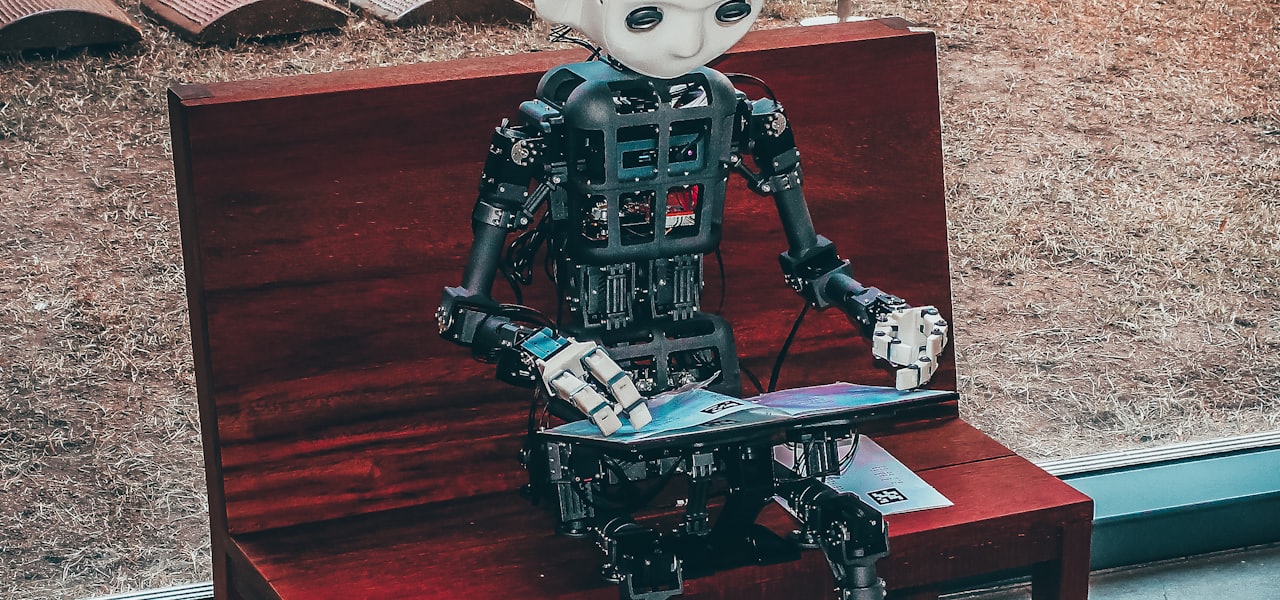
    SHYSTER is a legal expert system developed at the Australian National University in Canberra in 1993. It was written as the doctoral dissertation of James Popple under the supervision of Robin Stanton, Roger Clarke, Peter Drahos, and Malcolm Newey. A full technical report of the expert system, and a book further detailing its development and testing have also been published. SHYSTER emphasises its pragmatic approach, and posits that a legal expert system need not be based upon a complex model of legal reasoning in order to produce useful advice. Although SHYSTER attempts to model the way in which lawyers argue with cases, it does not attempt to model the way in which lawyers decide which cases to use in those arguments. SHYSTER is of a general design, permitting its operation in different legal domains. It was designed to provide advice in areas of case law that have been specified by a legal expert using a bespoke specification language. Its knowledge of the law is acquired, and represented, as information about cases. It produces its advice by examining, and arguing about, the similarities and differences between cases. It derives its name from Shyster: a slang word for someone who acts in a disreputable, unethical, or unscrupulous way, especially in the practice of law and politics. == Methods == SHYSTER is a specific example of a general category of legal expert systems, broadly defined as systems that make use of artificial intelligence (AI) techniques to solve legal problems. Legal AI systems can be divided into two categories: legal retrieval systems and legal analysis systems. SHYSTER belongs to the latter category of legal analysis systems. Legal analysis systems can be further subdivided into two categories: judgment machines and legal expert systems. SHYSTER again belongs to the latter category of legal expert systems. A legal expert system, as Popple uses the term, is a system capable of performing at a level expected of a lawyer: "AI systems which merely assist a lawyer in coming to legal conclusions or preparing legal arguments are not here considered to be legal expert systems; a legal expert system must exhibit some legal expertise itself." Designed to operate in more than one legal domain, and be of specific use to the common law of Australia, SHYSTER accounts for statute law, case law, and the doctrine of precedent in areas of private law. Whilst it accommodates statute law, it is primarily a case-based system, in contradistinction to rule-based systems like MYCIN. More specifically, it was designed in a manner enabling it to be linked with a rule-based system to form a hybrid system. Although case-based reasoning possesses an advantage over rule-based systems by the elimination of complex semantic networks, it suffers from intractable theoretical obstacles: without some further theory it cannot be predicted what features of a case will turn out to be relevant. Users of SHYSTER therefore require some legal expertise. Richard Susskind argues that "jurisprudence can and ought to supply the models of law and legal reasoning that are required for computerized [sic] implementation in the process of building all expert systems in law". Popple, however, believes jurisprudence is of limited value to developers of legal expert systems. He posits that a lawyer must have a model of the law (maybe unarticulated) which includes assumptions about the nature of law and legal reasoning, but that model need not rest on basic philosophical foundations. It may be a pragmatic model, developed through experience within the legal system. Many lawyers perform their work with little or no jurisprudential knowledge, and there is no evidence to suggest that they are worse, or better, at their jobs than lawyers well-versed in jurisprudence. The fact that many lawyers have mastered the process of legal reasoning, without having been immersed in jurisprudence, suggests that it may indeed be possible to develop legal expert systems of good quality without jurisprudential insight. As a pragmatic legal expert system SHYSTER is the embodiment of this belief. A further example of SHYSTER’s pragmatism is its simple knowledge representation structure. This structure was designed to facilitate specification of different areas of case law using a specification language. Areas of case law are specified in terms of the cases and attributes of importance in those areas. SHYSTER weights its attributes and checks for dependence between them. In order to choose cases upon which to construct its opinions, SHYSTER calculates distances between cases and uses these distances to determine which of the leading cases are nearest to the instant case. To this end SHYSTER can be seen to adopt and expand upon nearest neighbor search methods used in pattern recognition. These nearest cases are used to produce an argument (based on similarities and differences between the cases) about the likely outcome in the instant case. This argument relies on the doctrine of precedent; it assumes that the instant case will be decided the same way as was the nearest case. SHYSTER then uses information about these nearest cases to construct a report. The report that SHYSTER generates makes a prediction and justifies that prediction by reference only to cases and their similarities and differences: the calculations that SHYSTER performs in coming to its opinion do not appear in that opinion. Safeguards are employed to warn users if SHYSTER doubts the veracity of its advice. == Results == SHYSTER was tested in four different and disparate areas of case law. Four specifications were written, each representing an area of Australian law: an aspect of the law of trover; the meaning of "authorization [sic]" in copyright law of Australia; the categorisation of employment contracts; and the implication of natural justice in administrative decision-making. SHYSTER was evaluated under five headings: its usefulness, its generality, the quality of its advice, its limitations, and possible enhancements that could be made to it. Despite its simple knowledge representation structure, it has shown itself capable of producing good advice, and its simple structure has facilitated the specification of different areas of law. Appreciating the difficulties encountered by legal expert systems developers in adequately representing legal knowledge can assist in appreciating the shortcomings of digital rights management technologies. Some academics believe future digital rights management systems may become sophisticated enough to permit exceptions to copyright law. To this end SHYSTER's attempt to model "authorization [sic]" in the Copyright Act can be viewed as pioneering work in this field. The term "authorization [sic]" is undefined in the Copyright Act. Consequently, a number of cases have been before the courts seeking answers as to what conduct amounts to authorisation. The main contexts in which the issue has arisen are analogous to permitted exceptions to copyright currently prevented by most digital rights management technologies: "home taping of recorded materials, photocopying in educational institutions and performing works in public". When applied to one case concerning compact cassettes, SHYSTER successfully agreed that Amstrad did not authorise the infringement. 'shyster-myci'n Popple highlighted the most obvious avenue of future research using SHYSTER as the development of a rule-based system, and the linking together of that rule-based system with the existing case-based system to form a hybrid system. This intention was eventually realised by Thomas O’Callaghan, the creator of SHYSTER-MYCIN: a hybrid legal expert system first presented at ICAIL '03, 24–28 June 2003 in Edinburgh, Scotland. MYCIN is an existing medical expert system, which was adapted for use with SHYSTER. MYCIN’s controversial "certainty factor" is not used in SHYSTER-MYCIN. The reason for this is the difficulty in scientifically establishing how certain a fact is in a legal domain. The rule-based approach of the MYCIN part is used to reason with the provisions of an Act of Parliament only. This hybrid system enables the case-based system (SHYSTER) to determine open textured concepts when required by the rule-based system (MYCIN). The ultimate conclusion of this joint endeavour is that a hybrid approach is preferred in the creation of legal expert systems where "it is appropriate to use rule-based reasoning when dealing with statutes, and…case-based reasoning when dealing with cases".

    Read more →
  • Machine learning

    Machine learning

    Machine learning (ML) is a field of study in artificial intelligence concerned with the development and study of statistical algorithms that can learn from data and generalize to unseen data, and thus perform tasks without being explicitly programmed. Advances in the field of deep learning have allowed neural networks, a class of statistical algorithms, to surpass many previous machine learning approaches in performance. Statistics and mathematical optimisation methods compose the foundations of machine learning. Data mining is a related field of study, focusing on exploratory data analysis (EDA) through unsupervised learning. From a theoretical viewpoint, probably approximately correct learning provides a mathematical and statistical framework for describing machine learning. Most traditional machine learning and deep learning algorithms can be described as empirical risk minimisation under this framework. == History == The term machine learning was coined in 1959 by Arthur Samuel, an IBM employee and pioneer in the field of computer gaming and artificial intelligence. The synonym self-teaching computers was also used during this time period. The earliest machine learning program was introduced in the 1950s, when Samuel invented a computer program that calculated the chance of winning in checkers for each side, but the history of machine learning is rooted in decades of efforts to study human cognitive processes. In 1949, Canadian psychologist Donald Hebb published the book The Organization of Behavior, in which he introduced a theoretical neural structure formed by certain interactions among nerve cells. The Hebbian theory of neuron interaction set the groundwork for how many machine learning algorithms work, with connected artificial neurons changing the strength of their connections based on data. Other researchers who have studied human cognitive systems contributed to the modern machine learning technologies as well, including Walter Pitts and Warren McCulloch, who proposed the first mathematical model of neural networks including algorithms that mirror human thought processes. By the early 1960s, an experimental "learning machine" with punched tape memory, called Cybertron, had been developed by Raytheon Company to analyse sonar signals, electrocardiograms, and speech patterns using rudimentary reinforcement learning. It was repetitively "trained" by a human operator/teacher to recognise patterns and equipped with a "goof" button to cause it to reevaluate incorrect decisions. A representative book on research into machine learning during the 1960s was Nils Nilsson's book "Learning Machines", dealing mostly with machine learning for pattern classification. Interest related to pattern recognition continued into the 1970s, as described by Duda and Hart in 1973. In 1981, a report was given on using teaching strategies so that an artificial neural network learns to recognise 40 characters (26 letters, 10 digits, and 4 special symbols) from a computer terminal. Tom M. Mitchell provided a widely quoted, more formal definition of the algorithms studied in the machine learning field: "A computer program is said to learn from experience E with respect to some class of tasks T and performance measure P if its performance at tasks in T, as measured by P, improves with experience E." This definition of the tasks in which machine learning is concerned is fundamentally operational rather than defining the field in cognitive terms. This follows Alan Turing's proposal in his paper "Computing Machinery and Intelligence", in which the question, "Can machines think?", is replaced by asking whether machines can convincingly imitate a human in its responses to human-posed questions. In 2014 Ian Goodfellow and others introduced generative adversarial networks (GANs) which could produce realistic synthetic data. By 2016 AlphaGo had won against top human players in Go using reinforcement learning techniques. == Relationships to other fields == === Artificial intelligence === As a scientific endeavour, machine learning grew out of the quest for artificial intelligence (AI). In the early days of AI as an academic discipline, some researchers were interested in having machines learn from data. They attempted to approach the problem with various symbolic methods, as well as what were then termed "neural networks"; these were mostly perceptrons and other models that were later found to be reinventions of the generalised linear models of statistics. Probabilistic reasoning was also employed, especially in automated medical diagnosis. However, an increasing emphasis on the logical, knowledge-based approach caused a rift between AI and machine learning. Probabilistic systems were plagued by theoretical and practical problems of data acquisition and representation. By 1980, expert systems had come to dominate AI, and statistics was out of favour. Work on symbolic/knowledge-based learning continued within AI, leading to inductive logic programming (ILP), but the more statistical line of research was now outside the field of AI proper, in pattern recognition and information retrieval. Neural network research was abandoned by AI and computer science around the same time. This subfield, termed "connectionism", was continued by researchers from other disciplines, including John Hopfield, David Rumelhart, and Geoffrey Hinton. Their main success came in the mid-1980s with the reinvention of backpropagation. Machine learning (ML), reorganised and recognised as its own field, started to flourish in the 1990s. The field changed its goal from achieving artificial intelligence to tackling solvable problems of a practical nature. It shifted focus away from the symbolic approaches it had inherited from AI, and toward methods and models borrowed from statistics, fuzzy logic, and probability theory. === Data compression === === Data mining === Machine learning and data mining often employ the same methods and overlap significantly, but while machine learning focuses on prediction based on known properties learned from the training data, data mining focuses on the discovery of previously unknown properties in the data (this is the analysis step of knowledge discovery in databases). Data mining uses many machine learning methods, but with different goals; on the other hand, machine learning also employs data mining methods as "unsupervised learning" or as a preprocessing step to improve learner accuracy. Much of the confusion between these two research communities comes from the basic assumptions they work with: in machine learning, performance is usually evaluated with respect to the ability to reproduce known knowledge, while in knowledge discovery and data mining (KDD) the key task is the discovery of previously unknown knowledge. Evaluated with respect to known knowledge, an uninformed (unsupervised) method will easily be outperformed by other supervised methods, while in a typical KDD task, supervised methods cannot be used due to the unavailability of training data. Machine learning also has intimate ties to optimization: Many learning problems are formulated as minimisation of some loss function on a training set of examples. Loss functions express the discrepancy between the predictions of the model being trained and the actual problem instances (for example, in classification, one wants to assign a label to instances, and models are trained to correctly predict the preassigned labels of a set of examples). === Generalization === Characterizing the generalisation of various learning algorithms is an active topic of current research, especially for deep learning algorithms. === Statistics === Machine learning and statistics are closely related fields in terms of methods, but distinct in their principal goal: statistics draws population inferences from a sample, while machine learning finds generalisable predictive patterns. Conventional statistical analyses require the a priori selection of a model most suitable for the study data set. In addition, only significant or theoretically relevant variables based on previous experience are included for analysis. In contrast, machine learning is not built on a pre-structured model; rather, the data shape the model by detecting underlying patterns. The more variables (input) used to train the model, the more accurate the ultimate model will be. Leo Breiman distinguished two statistical modelling paradigms: the data model and the algorithmic model, wherein "algorithmic model" means more or less the machine learning algorithms like Random forest. Some statisticians have adopted methods from machine learning, producing the field of statistical learning. === Statistical physics === Analytical and computational techniques derived from deep-rooted physics of disordered systems can be extended to large-scale problems, including machine learning, e.g., to analyse the weight space of deep neural networks. Statistical physics is thus

    Read more →
  • Fuzzy Control Language

    Fuzzy Control Language

    Fuzzy Control Language, or FCL, is a language for implementing fuzzy logic, especially fuzzy control. It was standardized by IEC 61131-7. It is a domain-specific programming language: it has no features unrelated to fuzzy logic, so it is impossible to even print "Hello, world!". Therefore, one does not write a program in FCL, but one may write part of it in FCL. == Example == RULE 0: IF (temperature IS cold) THEN (output IS low) RULE 1: IF (temperature IS very cold) THEN (output IS high) == Limitations == FCL is not an entirely complete fuzzy language, for instance, it does not support "hedges", which are adverbs that modify the set. For instance, the programmer cannot write: RULE 0: If (Temperature is VERY COLD) then (Output is VERY HIGH) However, the programmer can simply define new sets for "very cold" and "very high". FCL also lacks support for higher-order fuzzy sets, subsets, and so on. None of these features are essential to fuzzy control, although they may be nice to have.

    Read more →
  • Agent2Agent

    Agent2Agent

    Agent2Agent (A2A) is an open protocol that defines how artificial intelligence agents communicate with each other across different systems. It is intended to allow agents built by different vendors or frameworks to discover one another, exchange messages, and coordinate tasks. == History == The Agent2Agent protocol was announced by Google in April 2025 as an open standard for agent interoperability. In June 2025, Google transferred the protocol, its specification, and related software development kits to the Linux Foundation. The Linux Foundation established the Agent2Agent project to provide vendor-neutral governance. == Design == The A2A protocol supports communication between autonomous software agents operating across different platforms and organizations. It enables agents to discover one another and exchange structured messages without requiring shared internal state or proprietary integrations. A2A uses metadata documents, known as Agent Cards, to describe an agent's capabilities and how it can be accessed. These documents are exchanged using widely adopted web technologies such as HTTP and JSON-based messaging formats. A2A includes support for authentication and authorization to control which agents may participate in workflows. The protocol supports established security technologies including Transport Layer Security (TLS), JSON Web Tokens (JWTs), and OpenID Connect. A2A is often discussed alongside the Model Context Protocol (MCP). MCP focuses on connecting agents to tools and data sources, while A2A focuses on communication between agents themselves. == Adoption == At the time the Linux Foundation adopted the protocol, more than 100 technology companies had announced support for the Agent2Agent project. Microsoft stated that it planned to support the protocol in its AI platforms. == Reception == Technology press coverage has described A2A as an attempt to reduce fragmentation in AI agent ecosystems by providing a shared communication layer. TechRepublic characterized the protocol as part of a broader industry effort to reduce vendor lock-in for enterprise AI systems.

    Read more →
  • The Quantum Thief

    The Quantum Thief

    The Quantum Thief is the debut science fiction novel by Finnish writer Hannu Rajaniemi and the first novel in a trilogy featuring the character of Jean le Flambeur; the sequels are The Fractal Prince (2012) and The Causal Angel (2014). The novel was published in Britain by Gollancz in 2010, and by Tor in 2011 in the US. It is a heist story, set in a futuristic Solar System, that features a protagonist modeled on Arsène Lupin, the gentleman thief of Maurice Leblanc. The novel was nominated for the 2011 Locus Award for Best First Novel, and was second runner-up for the 2011 Campbell Memorial Award. == Setting == Several centuries after the technological singularity largely destroyed Earth, various posthuman factions compete for dominance in the Solar System. Though sentient superintelligent AGI has never been successfully developed, civilization has been greatly transformed by the proliferation of Hansonian brain emulations (termed "gogols" in reference to Nikolai Gogol, and in particular his novel Dead Souls). An alliance of powerful gogol copies rule the inner system from computronium megastructures housing trillions of virtual minds, laboring to resurrect the dead in religious devotion to the philosophy of Nikolai Fedorov. This alliance, the Sobornost, has been in conflict with a community of quantum entangled minds who adhere to the "no-cloning" principle of quantum information theory, and so do not see the Sobornost's ultimate goal as resurrection, but death. Most of this community, the Zoku, was devastated when Jupiter was destroyed with a weaponized gravitational singularity. Among the last remnants of near-baseline humanity exist on the mobile cities of Mars, where advanced cryptography and an obsessive privacy culture ensure that the Sobornost cannot upload their citizens' minds. The most notable of these cities is the Oubliette, where time is used as a currency. When a citizen's balance reaches zero their mind is transferred to a robotic body to serve the needs of the city for a set period, before being returned to their original body with a restored balance of time. == Plot summary == Countless gogols of the legendary gentleman thief Jean Le Flambeur are trapped in a virtual Sobornost prison in orbit around Neptune, playing an iterated prisoner's dilemma until his mind learns to cooperate. A warrior from the Oort Cloud, which has been settled by Finnish colonists, successfully retrieves one of the Le Flambeur gogols and uploads it into a real-space body. Acting on behalf of a competing Sobornost authority, this Oortian, Mieli, ferries the thief to the Martian city known as The Oubliette, where he has stored his memories for later recovery. The two intend to recover his memories so that he may return to an operating capacity sufficient to serve his Sobornost benefactor in a theft and repay his liberation. On the Oubliette, the young detective Isidore Beautrelet helps vigilantes catch Sobornost agents illicitly uploading human minds. These vigilantes are revealed to be in the service of a local colony of Zoku. Beautrelet is employed to investigate the arrival of Le Flambeur, and in the process becomes aware that the Oubliette's cryptographic security was always compromised. The memories of its citizens are fabrications, and the "King of Mars" long believed ousted in a revolution, still reigns behind the scenes. This King, who is another copy of Jean Le Flambeur, is defeated in the ensuing conflict. Le Flambeur fails to recover all of his memories, which he had locked with a quantum entangled revolver that required him to kill several of his old friends to open his stored memory. He and Mieli escape a liberated Mars having recovered only a mysterious "Schrödinger’s Box" from the Memory Palace. == Themes == Themes central to The Quantum Thief are the unreliability and malleability of memory and the effects of extreme longevity on an individual's perspective and personality. Prisons, surveillance and control in society are also major themes. In the book, the people living in the Oubliette society on Mars have two types of memory; in addition to a traditional, personal memory, there is the exomemory, which can be accessed by other people, from anywhere in the city. Memories about personal experiences can be stored in the exomemory and partitioned, with different levels of access granted to different people. These memories can be used, among other things, as an expedient form of communication. The Oubliette society has an economy where time is used as currency. When an individual's time is expended, their consciousness is uploaded into a "Quiet". The Quiet are mute machine servants who maintain and protect the city. Although the quiet seem to have little interest in the world outside their occupations, they do seem to retain some traces of their former personalities and memories. The conspiracy central to the plot involves the hidden rulers, called the "cryptarchs", manipulating and abusing the exomemory and through the citizens' transformations to quiet and back, the traditional memory as well. In the book, the Oubliette society is compared to a panopticon; a prison, where every action of the dwellers can be scrutinized. == History and influences == The first chapter of The Quantum Thief was presented by Rajaniemi's literary agent, John Jarrold, to Gollancz as the basis for the three-book deal that was eventually secured. Rajaniemi has stated that he had "come up with an outline that had every single idea I could cram into it, because I wanted to be worthy of what had happened." The outline eventually expanded into three parts, and the first part became The Quantum Thief. The novel's plot was inspired by one of Rajaniemi's favorite characters in fiction, Maurice Leblanc's gentleman thief Arsène Lupin, who operates on both sides of the law. What intrigued Rajaniemi were the cycles of redemption and relapse Lupin goes through as he tries to go straight, always falling short. Besides LeBlanc, Rajaniemi mentioned Roger Zelazny as a strong influence. Ian McDonald was the other science fiction author he mentioned as influential, plus Frances A.Yates's book The Art of Memory, for memory palaces. In an interview, Rajaniemi said he wasn't trying to write the novel as hard science fiction: "For me, the more important consequence of having a scientific background is a degree of speculative rigour: trying hard to work out the consequences of the assumptions one begins with." == Reception == The novel has received generally positive reviews. Gary K. Wolfe writes in his Locus review that Rajaniemi has "spectacularly delivered on the promise that this is likely the most important debut SF novel we'll see this year". James Lovegrove, reviewing the book in his Financial Times column, notes that "many an anglophone author would kill to turn out prose half as good as this, especially on their maiden effort." Eric Brown, reviewing for The Guardian, finds the novel to be "a brilliant debut", while alluding to the "apocryphal" (and incorrect) myth that "this novel sold on the strength of its first line." Sam Bandah, at SciFiNow, praises the novel for "its engaging narrative and characters backed by often almost intimidatingly good sci-fi concepts." Criticism for the novel has generally centred on Rajaniemi's sparse "show, don't tell" writing style. Brown notes that "the author makes no concessions to the lazy reader with info-dumps or convenient explanations." Niall Alexander, of the Speculative Scotsman, states that "had there been some sort of index, [he] would have gladly (and repeatedly) referred to it during the mind-boggling first third of The Quantum Thief", while proclaiming the novel to be "the sci-fi debut of 2010." == Awards == Nominee for the 2011 Locus Award for Best First Novel. Third place for the 2011 John W. Campbell Memorial Award for Best Science Fiction Novel

    Read more →
  • List of 3D rendering software

    List of 3D rendering software

    3D rendering software products are the dedicated engines used for rendering computer-generated imagery. This is not the same as 3D modeling software, which involves the creation of 3D models, for which the software listed below can produce realistically rendered visualisations.General-purpose packages which can have their own built-in rendering capabilities are not listed here; these can be found in the list of 3D computer graphics software and list of 3D animation software. See 3D computer graphics software for more discussion about the distinctions.

    Read more →
  • Dartmouth workshop

    Dartmouth workshop

    The Dartmouth Summer Research Project on Artificial Intelligence was a 1956 summer workshop widely considered to be the founding event of artificial intelligence as a field. The workshop has been referred to as "the Constitutional Convention of AI". The project's four organizers, Claude Shannon, John McCarthy, Nathaniel Rochester and Marvin Minsky, are considered some of the "founding fathers" of AI. However it was not the first conference devoted to what would now be described as the question of artificial intelligence: it postdated meetings such as the 1951 Paris cybernetics conference and the Macy meetings. The project lasted approximately six to eight weeks and consisted largely of brainstorming sessions. Eleven mathematicians and scientists originally planned to attend; not all of them attended, but more than ten others came for short times. == Background == In the early 1950s, there were various names for the field of "thinking machines": cybernetics, automata theory, and complex information processing. The variety of names suggests the variety of conceptual orientations. In 1955, John McCarthy, then a young Assistant Professor of Mathematics at Dartmouth College, decided to organize a group to clarify and develop ideas about thinking machines. He picked the name 'Artificial Intelligence' for the new field. He chose the name partly for its neutrality; avoiding a focus on narrow automata theory, and avoiding cybernetics which was heavily focused on analog feedback, as well as him potentially having to accept the assertive Norbert Wiener as guru or having to argue with him. In early 1955, McCarthy approached the Rockefeller Foundation to request funding for a summer seminar at Dartmouth for about 10 participants. In June, he and Claude Shannon, a founder of information theory then at Bell Labs, met with Robert Morison, Director of Biological and Medical Research to discuss the idea and possible funding, though Morison was unsure whether money would be made available for such a visionary project. On September 2, 1955, the project was formally proposed by McCarthy, Marvin Minsky, Nathaniel Rochester and Claude Shannon. The proposal is credited with introducing the term 'artificial intelligence'. The Proposal states: We propose that a 2-month, 10-man study of artificial intelligence be carried out during the summer of 1956 at Dartmouth College in Hanover, New Hampshire. The study is to proceed on the basis of the conjecture that every aspect of learning or any other feature of intelligence can in principle be so precisely described that a machine can be made to simulate it. An attempt will be made to find how to make machines use language, form abstractions and concepts, solve kinds of problems now reserved for humans, and improve themselves. We think that a significant advance can be made in one or more of these problems if a carefully selected group of scientists work on it together for a summer. The proposal goes on to discuss computers, natural language processing, neural networks, theory of computation, abstraction and creativity (these areas within the field of artificial intelligence are considered still relevant to the work of the field). On May 26, 1956, McCarthy notified Robert Morison of the planned 11 attendees: For the full period: 1) Dr. Marvin Minsky 2) Dr. Julian Bigelow 3) Professor D.M. Mackay 4) Mr. Ray Solomonoff 5) Mr. John Holland 6) Dr. John McCarthy For four weeks: 7) Dr. Claude Shannon 8) Mr. Nathaniel Rochester 9) Mr. Oliver Selfridge For the first two weeks: 10) Dr. Allen Newell 11) Professor Herbert Simon He noted, "we will concentrate on a problem of devising a way of programming a calculator to form concepts and to form generalizations. This of course is subject to change when the group gets together." The actual participants came at different times, mostly for much shorter times. Trenchard More replaced Rochester for three weeks and MacKay and Holland did not attend—but the project was set to begin. Around June 18, 1956, the earliest participants (perhaps only Ray Solomonoff, maybe with Tom Etter) arrived at the Dartmouth campus in Hanover, N.H., to join John McCarthy who already had an apartment there. Solomonoff and Minsky stayed at Professors' apartments, but most would stay at the Hanover Inn. == Dates == The Dartmouth Workshop is usually said to have run for six weeks. Ray Solomonoff's notes taken during the workshop, however, indicate that it ran for roughly eight weeks, from about June 18 to August 17. Solomonoff's notes start on June 22; June 28 mentions Minsky, June 30 mentions Hanover, N.H., July 1 mentions Tom Etter. On August 17, Solomonoff gave a final talk. == Participants == Initially, McCarthy lost his list of attendees. Instead, after the workshop, McCarthy sent Solomonoff a preliminary list of participants and visitors plus those interested in the subject. 47 people were listed. Solomonoff, however, made a list of participants in his notes of the summer project: Ray Solomonoff Marvin Minsky John McCarthy Claude Shannon Trenchard More Nat Rochester Oliver Selfridge Julian Bigelow W. Ross Ashby W.S. McCulloch Abraham Robinson Tom Etter John Nash David Sayre Arthur Samuel Kenneth R. Shoulders Shoulders' friend Alex Bernstein Herbert Simon Allen Newell Shannon attended Solomonoff's talk on July 10 and Bigelow gave a talk on August 15. Solomonoff doesn't mention Bernard Widrow, but in 1994 Widrow said that he and an unidentified colleague from the same lab in MIT had attended for one week. In the same interview Widrow recalled that "I think [Wesley] Clark and [Belmont] Farley were there from Lincoln Lab." Trenchard mentions R. Culver and Solomonoff mentions Bill Shutz. Herb Gelernter didn't attend, but was influenced later by what Rochester learned. In an article in IEEE Spectrum, Grace Solomonoff additionally identifies Peter Milner in a photo taken by Nathaniel Rochester in front of Dartmouth Hall. Ray Solomonoff, Marvin Minsky, and John McCarthy were the only three who stayed for the full time. Trenchard took attendance during two weeks of his three-week visit. From three to about eight people would attend the daily sessions. == Event and aftermath == They had the entire top floor of the Dartmouth Math Department to themselves, and most weekdays they would meet at the main math classroom where someone might lead a discussion focusing on his ideas, or more frequently, a general discussion would be held. It was not a directed group research project; discussions covered many topics, but several directions are considered to have been initiated or encouraged by the Workshop: the rise of symbolic methods, systems focused on limited domains (early expert systems), and deductive systems versus inductive systems. One participant, Arthur Samuel, said, "It was very interesting, very stimulating, very exciting". Ray Solomonoff kept notes giving his impression of the talks and the ideas from various discussions. === McCarthy's 1956 AI distribution list === This is the list in the "People Interested in the Artificial Intelligence Problem" document which McCarthy produced in 1956, partly in lieu of a list of attendees at the Dartmouth workshop. According to McCarthy the list was "being sent to the people on the list and a few others", and its purpose was "to let those on it know who is interested in receiving documents on the problem" of artificial intelligence. McCarthy also promised to deliver them a report on the Dartmouth conference, and to send an updated list soon afterwards. It includes people who did not attend the conference and does not include everyone who did attend it.

    Read more →
  • Neuroshima

    Neuroshima

    Neuroshima is a Polish tabletop roleplaying system inspired by such films and games as Mad Max, Fallout, The Matrix, Terminator and Deadlands: Hell on Earth. It is currently available only in Polish. The game's motto is "never trust the machines". Its designers include Michal Oracz and Ignacy Trzewiczek. == Setting == The game describes the United States in the mid-21st century, after a nuclear war started by a cybernetic revolt, which molded the continent into a barren wasteland. It seems that the reason for the war to break out was a sentient Artificial Intelligence commonly referred to as Moloch and made up of interconnected net of military computers: automated factories, military facilities, power plants and alike, that now cover the whole north of the U.S., from Oregon to the Great Lakes. On the south, there is another creation, called the Neojungle, that poses a threat to those who survived the war. It is a semi-intelligent carnivorous vegetation that grows very quickly, advancing north from Latin America. Right in the middle, there are humans. They are surrounded by mutant creatures, some bred by Moloch and hostile towards humans, and some simply animals and humans misshapen by nuclear fallout. On top of that there are Moloch's deadly machines lurking to complete the picture. But what is stressed in the book is that the worst enemy of humans is within them: hatred, indifference, greed. === Landscapes of Neuroshima === Car wrecks, ruined towns and villages, collapsed roofs on deserted houses, broken glass in the windows of abandoned gas stations fill the landscape of the United States of the middle of the 21st century. Technology is history - cars will not start, radios are jammed, no electricity whatsoever almost everywhere the characters go. Shops and malls are looted, prosperous villages are burned by gangers, and safe places are very sparse. === People in Neuroshima === No one knows how many people survived the war with machines, but it is estimated that their number oscillates around 2-3 million. Some people reverted to nomadic lifestyles and live in the deserts, some of them try to build the civilisation anew in devastated cities, some of them form gangs of highwaymen (called gangers), some of them just try to make a living by growing crops, and finally, there are those who just wander around the wasteland; the adventuring sort here is mostly represented by player characters. Each village they visit in this world is a discrete microcosm and nothing is certain as whether the inhabitants are welcoming or shoot strangers on sight. The continent is full of small, anonymous settlements, but there are places which aspire to become post-nuclear states. === Places in Neuroshima === In this world it is very important where you come from, and that is because people are prejudiced and afraid of strangers. Different places produce different kinds of people, and who you are is determined by where you are from. Examples: The Southern Hegemony - (commonly referred to as 'the Hegemony') - located in what was once Arizona, New Mexico and partially Texas. A place where brute force determines one's place in the society. Dominated by gangs and unhampered by Moloch, the Hegemony is a threat to neighbouring lands. Vegas - the only well-lit city in the post-apocalyptic world. Home to many playhouses and casinos, it attracts people from every part of the country. Mother Desert - if you were born in the desert, whenever you go away from civilisation, you feel at home. Many Native Americans still live out there and are doing fine - after all the warheads did not hit the deserts. Detroit - known for some of the best drivers and racers in the post-nuclear US. Home of many gangs, such as The Shultz (mafia styled), Hurons (punkers), The League (racers), Parker Lots (gothic assassins) and the Gas Drinkers (mutant barbarians). New York - a place which has established a strong government and would like to rebuild America. They maintain schools, factories and railways and send soldiers to fight Moloch. Surprisingly enough, they sometimes succeed. Texas - the healthiest place in America. Actually, the only place where one can find green vegetation. Modern Texans still grow crops, breed horses and herd cattle, like their ancestors in the 19th century did. The Appalachian Federation - a place ruled by feudal lords. They have a social class system, in which people are divided into nobility and peasantry. Thanks to its iron and coal deposits, it's one of the richest places in the post-nuclear U.S. The Outpost - A mobile settlement run by scientists who aim to destroy Moloch. In coalition with New York, they manage an army, which is yet to stop Moloch's advance south. They steal technology from the machines they destroy and apply it to their own advantage. == System == The game uses its own, custom system of rules. The dice you use is d20. This system does not have an official name, but it is unconnected to the d20 system, as it typically uses three twenty-sided dice. === Four colours === Neuroshima relies on the division of the gameplay into something the authors called Four Colours, namely steel, chrome, rust and mercury. The choice of a particular colour is made by the gamemaster (the decision can be consulted with the players in order to enhance the game experience) and determines the mood, atmosphere and the type of events/characters present in the story. The name of the colour itself implies the kind of gameplay it will symbolise. These colours are: Steel - this kind of gameplay is characterised by a slightly optimistic attitude towards the world. The aim is to raise the spirit of the characters by showing them that the war with the machines that is going on may be a difficult one, but it is not unwinnable, and that humans, when strong and united, can build the world anew. Example of a story: a unit of soldiers dispatched from the Outpost is sent to build a bunker and establish a relay base far in the north in order to plan a counter-tactic against Moloch's advance south. Chromium - is characterised by a hedonistic attitude. The characters are supposed to enjoy anything that is left from the world after the war and the story is supposed to allow them to do that. Example: the characters are offered a well-paid job by a local ganger boss who extorts wares from local tradesmen. Their job is to drive around the county and pick up the extorted items and trade it for drugs. Rust - a depressing, pessimistic mood. The characters will encounter rust, dilapidation and ruin everywhere they go. All the elements and NPCs of a story played in this mood are supposed to put the characters down and destroy their spirit. Example: the characters, badly wounded after a gunfight and robbed of all their possession find refuge in a village which is constantly raided by gangers. The characters' quest is to repel those attacks, but the enemies outnumber them and are well equipped, whereas the characters have nothing to fight with. Mercury (Quicksilver) - the most depressing side of the game; usually stories played in this mood end with the death of all the characters. The aim of this mood is to show that any kind of action undertaken is futile and that the war is already over, hence all the people are already dead, which is a fact they just need to realise. Example: a group of soldiers stationed in a bunker is awaiting an attack by mutants. They are well-armed and trained, but there is a mistake in the intelligence they were given and they do not know yet that they are seriously outnumbered. The attack commences at dusk and it is already too late to retreat, so the characters decide to seal off the bunker, hopeful that the mutants will not be able to get inside and simply go away. The mutants attack the bunker with chemical weapons instead. The characters do not have enough gas masks to go around. As an effect, those strong enough will kill the weaker ones to get their masks, not knowing that the mutants will blow up the sealed entrance the following morning. == Official rulebooks and sourcebooks == The current edition is 1.5 [1]. Since the release of the game in 2003, sourcebooks have been appearing. The game keeps growing bigger with every add-on, as well as the storyline, which is updated in those sourcebooks and in Space Pirate (pl. Gwiezdny Pirat) magazine, also published by Portal. === List of released rulebooks and sourcebooks === Neuroshima 1.0 - the original edition of the core rulebook (out of print). Neuroshima 1.5 - enhanced and revised core rulebook, with new material added and some material cut out. Wyścig (The Race) - sourcebook dedicated to cars and racing; contains rules concerning building your own vehicle and new character classes connected with driving. Gladiator - sourcebook describing in detail the "Gladiator" character class. Supplement (Supplement) - sourcebook revising the core rulebook. Detroit - sourcebook describing the city of Detroit, its inhabi

    Read more →