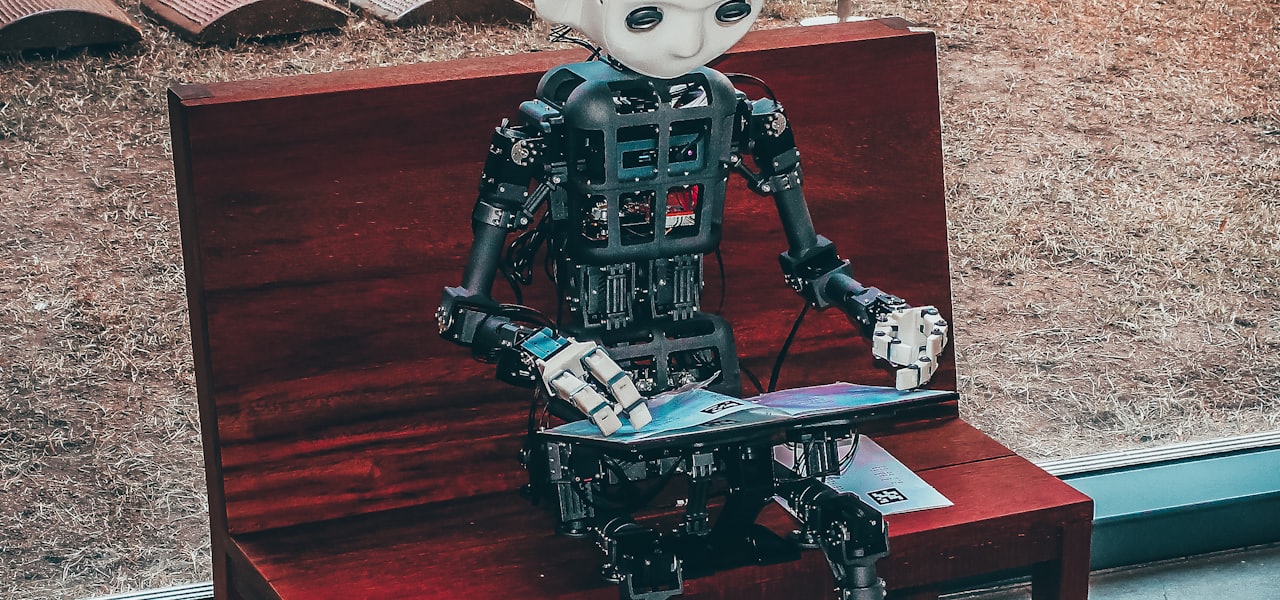
AI Chatbots and Assistants

Explore the best AI Chatbots and Assistants — independent reviews, comparisons, pricing and step-by-step how-to guides, curated by Aizhi.

  • AI effect

    AI effect

    The AI effect is a phenomenon in which advances in artificial intelligence lead to a redefinition of what is considered intelligence, such that capabilities achieved by AI systems are no longer regarded as examples of "real" intelligence. The concept has been used to describe both a cognitive tendency and a sociotechnical pattern, in which successful AI techniques are reclassified as routine computation or absorbed into other domains. Historian Pamela McCorduck described this as a recurring feature of AI research, noting in her 2004 book Machines Who Think that once a problem is solved, it is no longer considered evidence of intelligence. Researcher Rodney Brooks similarly observed in 2002 that once systems are understood, they are often regarded as "just computation". == Definition == The AI effect refers to a shift in how intelligence is defined as machines acquire new capabilities. Tasks such as playing chess, recognizing speech, or interpreting images were historically considered indicators of intelligence, but after successful automation they are often reclassified as routine computation. McCorduck described this as an "odd paradox", in which successful AI systems are assimilated into other domains, leaving AI researchers to focus on unsolved problems. The phenomenon is often interpreted as an instance of moving the goalposts. A commonly cited formulation is Tesler's theorem, often expressed as "AI is whatever hasn't been done yet". When problems are not fully formalised, they may be described using models involving human computation, such as human-assisted Turing machines. == Historical examples == === Game playing === Early AI systems capable of playing games such as checkers and chess were initially regarded as demonstrations of machine intelligence. As these systems improved and became better understood, their achievements were often reinterpreted as examples of computation rather than intelligence. The victory of IBM's Deep Blue over Garry Kasparov in 1997 is a frequently cited example. Critics argued that the system relied on brute-force methods rather than genuine understanding. === Pattern recognition === Technologies such as optical character recognition and speech recognition were once considered core problems in artificial intelligence. As these systems became reliable and widely deployed, they were increasingly treated as standard engineering solutions. === Integration into applications === Many techniques originally developed within AI research have been incorporated into broader technological systems, including marketing, automation, and software applications. Michael Swaine reported in 2007 that AI advances are often presented as developments in other fields. Marvin Minsky observed that successful AI innovations often evolve into separate disciplines. Nick Bostrom noted in 2006 that widely adopted technologies are often no longer labeled as AI. == Contemporary discussion == The AI effect continues to be discussed in the context of recent advances in machine learning, particularly large language models and other generative AI systems. As these systems have become more widely used, some researchers and commentators have noted that their capabilities are frequently described as statistical or mechanical once understood, rather than as intelligence. A 2016 survey of artificial intelligence also noted that AI systems are increasingly embedded in everyday applications, reinforcing earlier observations that successful AI technologies tend to become normalized and no longer identified as AI. At the same time, the widespread commercial use of artificial intelligence has led to greater visibility of the field, contrasting with earlier periods in which AI techniques were often present but unacknowledged. == Interpretations == === Cognitive bias === Some authors describe the AI effect as a cognitive bias in which expectations of intelligence shift as machines achieve new capabilities. === Sociotechnical perspective === Another interpretation emphasizes how technologies are reclassified over time as they become widespread and commercially successful. === Philosophical debate === Some philosophers argue that reclassification reflects genuine conceptual distinctions rather than bias. == Historical context == During periods such as the AI winter, researchers sometimes avoided the term "artificial intelligence" due to negative perceptions. In the 21st century, however, the term "AI" has become widely used in public discourse and marketing. == Broader implications == The AI effect has been linked to broader questions about human uniqueness and the nature of intelligence. Michael Kearns suggested that people may seek to preserve a special role for humans. Similar patterns have been observed in studies of animal cognition. Herbert A. Simon noted that artificial intelligence can provoke strong emotional reactions.

    Read more →
  • Torus interconnect

    Torus interconnect

    A torus interconnect is a switch-less network topology for connecting processing nodes in a parallel computer system. == Introduction == In geometry, a torus is created by revolving a circle about an axis coplanar to the circle. While this is a general definition in geometry, the topological properties of this type of shape describes the network topology in its essence. === Geometry illustration === In the representations below, the first is a one dimension torus, a simple circle. The second is a two dimension torus, in the shape of a 'doughnut'. The animation illustrates how a two dimension torus is generated from a rectangle by connecting its two pairs of opposite edges. At one dimension, a torus topology is equivalent to a ring interconnect network, in the shape of a circle. At two dimensions, it becomes equivalent to a two dimension mesh, but with extra connection at the edge nodes. === Torus network topology === A torus interconnect is a switch-less topology that can be seen as a mesh interconnect with nodes arranged in a rectilinear array of N = 2, 3, or more dimensions, with processors connected to their nearest neighbors, and corresponding processors on opposite edges of the array connected.[1] In this lattice, each node has 2N connections. This topology is named for the lattice formed in this way, which is topologically homogeneous to an N-dimensional torus. == Visualization == The first 3 dimensions of torus network topology are easier to visualize and are described below: 1D Torus: one dimension, n nodes are connected in closed loop with each node connected to its two nearest neighbors. Communication can take place in two directions, +x and −x. A 1D Torus is the same as ring interconnection. 2D Torus: two dimensions with degree of four, the nodes are imagined laid out in a two-dimensional rectangular lattice of n rows and n columns, with each node connected to its four nearest neighbors, and corresponding nodes on opposite edges connected. Communication can take place in four directions, +x, −x, +y, and −y. The total nodes of a 2D Torus is n2. 3D Torus: three dimensions, the nodes are imagined in a three-dimensional lattice in the shape of a rectangular prism, with each node connected with its six neighbors, with corresponding nodes on opposing faces of the array connected. Each edge consists of n nodes. communication can take place in six directions, +x, −x, +y, −y, +z, −z. Each edge of a 3D Torus consist of n nodes. The total nodes of 3D Torus is n3. ND Torus: N dimensions, each node of an N dimension torus has 2N neighbors, Communication can take place in 2N directions. Each edge consists of n nodes. Total nodes of this torus is nN. The main motivation of having higher dimension of torus is to achieve higher bandwidth, lower latency, and higher scalability. Higher-dimensional arrays are difficult to visualize. The above ruleset shows that each higher dimension adds another pair of nearest neighbor connections to each node. == Performance == A number of supercomputers on the TOP500 list use three-dimensional torus networks, e.g. IBM's Blue Gene/L and Blue Gene/P, and the Cray XT3. IBM's Blue Gene/Q uses a five-dimensional torus network. Fujitsu's K computer and the PRIMEHPC FX10 use a proprietary three-dimensional torus 3D mesh interconnect called Tofu. === 3D Torus performance simulation === Sandeep Palur and Dr. Ioan Raicu from Illinois Institute of Technology conducted experiments to simulate 3D torus performance. Their experiments ran on a computer with 250GB RAM, 48 cores and x86_64 architecture. The simulator they used was ROSS (Rensselaer’s Optimistic Simulation System). They mainly focused on three aspects: Varying network size Varying number of servers Varying message size They concluded that throughput decreases with the increase of servers and network size. Otherwise, throughput increases with the increase of message size. === 6D Torus product performance === Fujitsu Limited developed a 6D torus computer model called "Tofu". In their model, a 6D torus can achieve 100 GB/s off-chip bandwidth, 12 times higher scalability than a 3D torus, and high fault tolerance. The model is used in the K computer and Fugaku. === Cost === While long wrap-around links may be the easiest way to visualize the connection topology, in practice, restrictions on cable lengths often make long wrap-around links impractical. Instead, directly connected nodes—including nodes that the above visualization places on opposite edges of a grid, connected by a long wrap-around link—are physically placed nearly adjacent to each other in a folded torus network. Every link in the folded torus network is very short—almost as short as the nearest-neighbor links in a simple grid interconnect—and therefore low-latency.

    Read more →
  • G.hn

    G.hn

    Gigabit Home Networking (G.hn) is a specification for wired home networking that supports speeds up to 2 Gbit/s and operates over four types of legacy wires: telephone wiring, coaxial cables, power lines and plastic optical fiber. Some benefits of a multi-wire standard are lower equipment development costs and lower deployment costs for service providers (by allowing customer self-install). == History == G.hn was developed under the International Telecommunication Union's Telecommunication Standardization sector (the ITU-T) and promoted by the HomeGrid Forum and several other organizations. ITU-T Recommendation (the ITU's term for standard) G.9960, which received approval on October 9, 2009, specified the physical layers and the architecture of G.hn. The Data Link Layer (Recommendation G.9961) was approved on June 11, 2010. Prominent organizations, including CEPca, HomePNA, and UPA, who were creators of some of these interfaces, rallied behind the latest version of the standard, emphasizing its potential and significance in the home networking domain. Moreover, the ITU-T extended the technology with multiple input, multiple output (MIMO) technology to increase data rates and signaling distance. This new feature was approved in March 2012 under G.9963 Recommendation. The development and promotion of G.hn have been significantly supported by the HomeGrid Forum and several other organizations. The technology was not only designed to address home-networking challenges but also found applications beyond this initial scope, showcasing its versatility and potential in the networking domain. == Technical specifications == === Technical overview === G.hn specifies a single physical layer based on fast Fourier transform (FFT) orthogonal frequency-division multiplexing (OFDM) modulation and low-density parity-check code (LDPC) forward error correction (FEC) code. G.hn includes the capability to notch specific frequency bands to avoid interference with amateur radio bands and other licensed radio services. G.hn includes mechanisms to avoid interference with legacy home networking technologies and also with other wireline systems such as VDSL2 or other types of DSL used to access the home. OFDM systems split the transmitted signal into multiple orthogonal sub-carriers. In G.hn each one of the sub-carriers is modulated using QAM. The maximum QAM constellation supported by G.hn is 4096-QAM (12-bit QAM). The G.hn media access control is based on a time division multiple access (TDMA) architecture, in which a "domain master" schedules Transmission Opportunities (TXOPs) that can be used by one or more devices in the "domain". There are two types of TXOPs: Contention-Free Transmission Opportunities (CFTXOP), which have a fixed duration and are allocated to a specific pair of transmitter and receiver. CFTXOP are used for implementing TDMA Channel Access for specific applications that require quality of service (QoS) guarantees. Shared Transmission Opportunities (STXOP), which are shared among multiple devices in the network. STXOP are divided into Time Slots (TS). There are two types of TS: Contention-Free Time Slots (CFTS), which are used for implementing "implicit" token passing Channel Access. In G.hn, a series of consecutive CFTS is allocated to a number of devices. The allocation is performed by the "domain master" and broadcast to all nodes in the network. There are pre-defined rules that specify which device can transmit after another device has finished using the channel. As all devices know "who is next", there is no need to explicitly send a "token" between devices. The process of "passing the token" is implicit and ensures that there are no collisions during Channel access. Contention-Based Time Slots (CBTS), which are used for implementing CSMA/CARP Channel Access. In general, CSMA systems cannot completely avoid collisions, so CBTS are only useful for applications that do not have strict Quality of Service requirements. ==== Optimization for each medium ==== Although most elements of G.hn are common for all three media supported by the standard (power lines, phone lines and coaxial cable), G.hn includes media-specific optimizations for each media. Some of these media-specific parameters include: OFDM Carrier Spacing: 195.31 kHz in coaxial, 48.82 kHz in phone lines, 24.41 kHz in power lines. FEC Rates: G.hn's FEC can operate with code rates 1/2, 2/3, 5/6, 16/18 and 20/21. Although these rates are not media specific, it is expected that the higher code rates will be used in cleaner media (such as coaxial) while the lower code rates will be used in noisy environments such as power lines. Automatic repeat request (ARQ) mechanisms: G.hn supports operation both with and without ARQ (re-transmission). Although this is not media specific, it is expected that ARQ-less operation is sometimes appropriate for cleaner media (such as coaxial) while ARQ operation is appropriate for noisy environments such as power lines. Power levels and frequency bands: G.hn defines different power masks for each medium. MIMO support: Recommendation G.9963 includes provisions for transmitting G.hn signals over multiple AC wires (phase, neutral, ground), if they are physically available. In July 2016, G.9963 was updated to include MIMO support over twisted pairs. ==== Security ==== G.hn uses the Advanced Encryption Standard (AES) encryption algorithm (with a 128-bit key length) using the CCMP protocol to ensure confidentiality and message integrity. Authentication and key exchange is done following ITU-T Recommendation X.1035. G.hn specifies point-to-point security inside a domain, which means that each pair of transmitter and receiver uses a unique encryption key which is not shared by other devices in the same domain. For example, if node Alice sends data to node Bob, node Eve (in the same domain as Alice and Bob) will not be able to easily eavesdrop their communication. G.hn supports the concept of relays, in which one device can receive a message from one node and deliver it to another node farther away in the same domain. Relaying becomes critical for applications with complex network topologies that need to cover large distances, such as those found in industrial or utility applications. While a relay can read the source and target addresses, it cannot read the message's content due to its body being end-to-end-encrypted. ==== Profiles ==== The G.hn architecture includes the concept of profiles. Profiles are intended to address G.hn nodes with significantly different levels of complexity. In G.hn the higher complexity profiles are proper supersets of lower complexity profiles, so that devices based on different profiles can interoperate with each other. Examples of G.hn devices based on high complexity profiles are Residential Gateways or Set-Top Boxes. Examples of G.hn devices based on low complexity profiles are home automation, home security and smart grid devices. ==== Technical parameters ==== The chart depicts a summary of the crucial technical specifications of the G.hn standard. Many of these technical elements are consistent across different physical media, with variations seen in areas such as Tone Spacing and frequency ranges. This uniformity is essential as it allows silicon manufacturers to produce a singular chip capable of implementing all three media types, leading to cost savings. Presently, G.hn chipsets are compatible with all three media types. This compatibility allows system manufacturers to create devices that can adjust to any wiring type simply by modifying a software configuration in the equipment. === Spectrum === The G.hn spectrum depends on the medium as shown in the diagram below: === Protocol stack === G.hn specifies the physical layer and the data link layer, according to the OSI model. The G.hn Data Link Layer (Recommendation G.9961) is divided into three sub-layers: The Application Protocol Convergence (APC) Layer, which accepts frames (usually in Ethernet format) from the upper layer (Application Entity) and encapsulates them into G.hn APC protocol data units (APDUs). The maximum payload of each APDU is 214 bytes. The logical link control (LLC), which is responsible for encryption, aggregation, segmentation and automatic repeat-request. This sub-layer is also responsible for "relaying" of APDUs between nodes that may not be able to communicate through a direct connection. The medium access control (MAC), which schedules channel access. The G.hn physical layer (Recommendation G.9960) is divided into three sub-layers: The Physical Coding Sub-layer (PCS), responsible for generating PHY headers. The Physical Medium Attachment (PMA), responsible for scrambling and forward error correction coding/decoding. The Physical Medium Dependent (PMD), responsible for bit-loading and OFDM modulation. The interface between the Application Entity and the Data Link Layer is called A-interface. The interface between the Data Link Layer and the ph

    Read more →
  • KLJN Secure Key Exchange

    KLJN Secure Key Exchange

    Random-resistor-random-temperature Kirchhoff-law-Johnson-noise key exchange, also known as RRRT-KLJN or simply KLJN, is an approach for distributing cryptographic keys between two parties that claims to offer unconditional security. This claim, which has been contested, is significant, as the only other key exchange approach claiming to offer unconditional security is Quantum key distribution. The KLJN secure key exchange scheme was proposed in 2005 by Laszlo Kish and Granqvist. It has the advantage over quantum key distribution in that it can be performed over a metallic wire with just four resistors, two noise generators, and four voltage measuring devices---equipment that is low-priced and can be readily manufactured. It has the disadvantage that several attacks against KLJN have been identified which must be defended against. "Given that the amount of effort and funding that goes into Quantum Cryptography is substantial (some even mock it as a distraction from the ultimate prize which is quantum computing), it seems to me that the fact that classic thermodynamic resources allow for similar inherent security should give one pause," wrote Henning Dekant, the founder of the Quantum Computing Meetup, in April 2013. The Cybersecurity Curricula 2017, a joint project of the Association for Computing Machinery, the IEEE Computer Society, the Association for Information Systems, and the International Federation for Information Processing Technical Committee on Information Security Education (IFIP WG 11.8) recommends teaching the KLJN Scheme as part of teaching "Advanced concepts" in its knowledge unit on cryptography. == See Also/Further Reading ==

    Read more →
  • Clubhouse (app)

    Clubhouse (app)

    Clubhouse is an American social audio app for iOS and Android developed by Alpha Exploration Co. that enables users to participate in real-time, audio-only communication within virtual "rooms". Launched in March 2020 by Paul Davison and Rohan Seth, the platform is characterized by its "drop-in" nature, where users can join live discussions on a wide range of topics as either listeners or speakers. The application gained attention in early 2021, operating on an invite-only model and featuring appearances from public figures such as Elon Musk, Oprah Winfrey, and Mark Zuckerberg. During this period, Clubhouse reached a reported valuation of approximately $4 billion and contributed to the expansion of similar social audio features like Twitter Spaces and Spotify Greenroom. The app later expanded to Android in May 2021 and removed its waitlist in July 2021, opening access to the general public. == History == Clubhouse began as an invite only social media startup by Paul Davison and Rohan Seth in Fall 2019. Originally designed for podcasts with the name Talkshow, the app was rebranded as "Clubhouse" and officially released for the iOS operating system in March 2020 and as of May 2021 the Android systems as well. Clubhouse was valued at $100 million after receiving funding from notable angel investors. These investors included Ryan Hoover (Founder, Product Hunt), Balaji Srinivasan (Former CTO, Coinbase), James Beshara (Co-Founder, Tilt.com), and several venture capitalists, including a $12 million Series A investment from the venture capital firm, Andreessen Horowitz, in May 2020. The app gained popularity in the early months of the COVID-19 pandemic. It had 600,000 registered users by December 2020. In January 2021, CEO Paul Davison announced that the active weekly user base on the app consisted of approximately 2 million individuals. The company announced that it would start working on an Android version of the app. In that month, the app became widely used in Germany when German podcast hosts Philipp Klöckner and Philipp Gloeckler began an invite-chain over a Telegram group. It brought German influencers, journalists, and politicians to the platform. Clubhouse raised their Series B at a $1 billion valuation. On February 1, 2021, Clubhouse had an estimated 3.5 million downloads on a global level which grew rapidly to 8.1 million downloads by February 15. This significant growth in popularity was because celebrities such as Elon Musk and Mark Zuckerberg made appearances on the app. In the same month, Clubhouse hired an Android Software Developer. A year after the app's release, the number of weekly active users was greater than 10 million, but the user base declined 21% during three weeks from late February to early March. This decline was reportedly caused by a decrease in the number of Clubhouse users after its initial release. During its initial roll out, the app was accessible only by invitation, and invitation codes on eBay were selling at up to $400. On April 5, 2021, Clubhouse partnered with Stripe to launch its first monetizing feature called Clubhouse Payments. Although testing began with only 1,000 users, after a week, the company rolled out the functionality to another 60,000 or more users in the US. In the same month, Twitter entered in discussions to purchase Clubhouse for $4 billion. The talks ended with no acquisition. Later, the company raised their Series C round of funding at a $4 billion valuation. The app also received interest in a partnership, with the National Football League announcing a content deal that month; Twitter Spaces later poached Clubhouse's exclusive NFL deal with 20 official NFL Spaces scheduled for the 2021-22 season. Finally, On May 9, 2021, Clubhouse launched a beta version of the Android app for users in the US, and on May 21, 2021, Clubhouse became available worldwide for Android users. In July 2021, Clubhouse announced a partnership with TED to offer exclusive talks. and on July 21, 2021, the company discarded its invitation system and made the application available to all, though a wait list for registration was still applied in order to manage new traffic. As of the time of the announcement, the company stated it had 10 million users on the wait list. On September 23, 2021, the company announced a new feature named "Wave". In October 2021, Clubhouse rolled out new features called "Replays and Clips". In April 2023, the company announced it was reducing its staff by half amid a "resetting" due to post-pandemic market shifts. == Features == === Rooms === The primary feature of Clubhouse is real-time virtual "rooms" in which users can communicate with each other via audio. Rooms are divided into different categories based on levels of privacy. Moderator roles are denoted by a green star that appears next to the user's name. When a user joins a room, they are initially assigned to the role of a "listener" and cannot unmute themselves. Listeners can notify the moderators of their intent to join the stage and speak by clicking on the "raise hand" icon. Users who are invited to the stage become "speakers" and can unmute themselves. Users can exit a room by tapping the "leave quietly" button or with the help of peace sign emoji. === Houses === In August 2022, Clubhouse announced a feature called Houses, an invite-based version of the rooms. === Events === A lot of conversations in Clubhouse are of spontaneous nature. However, users can schedule conversations by creating events. While scheduling an event, users can first name the event and then set the date and time at which the conversation will begin. Users can also add co-hosts to help moderate the event. Once the event has been created, it is added to the Clubhouse "bulletin". The bulletin shows upcoming scheduled events and allows users to set notifications for events by clicking the bell icon corresponding to the event. Users can access the bulletin by clicking on the calendar icon at the top of the home page. === Clubs === At the Clubhouse, clubs are user communities that regularly discuss a common interest. Many clubs are present in Clubhouse which represents a wide array of topics. Users can find clubs by name under the search tab. A club consists of three categories of users: "Admin", "Leader", and "Member". Members can create private rooms and invite more users into the club. Leaders have all the privileges of a member. Apart from that, they are authorized to create/schedule club-branded open rooms. An admin can modify club settings, add/delete users, change user privileges and create/schedule any type of room. There are three types of clubs: "Open", "By Approval", and "Closed" for membership. Any user can join an open club by pressing the "Join The Club" button on the club profile. In case of approval, users need to apply and wait for membership by clicking the "Apply To Join" button on the club profile. The admins of the respective club are privileged to accept or reject the user's request. In a closed club, membership is limited to users selected by the club admin. All users of a club will be notified when a public room within the club is created. The club creation is restricted to active users and whoever creates the club will become the club admin. Eligible users can create a club by going to their profile, press the "+" sign present in the "Member of" section. Clubs in which a user is a member are shown on their profile page. The first club to half a million members was the Human Behavior Club founded by The Digital Doctor (Dr. Sohaib Imtiaz). === Backchannel === Backchannel is the messaging function which allows users to interact individually or within a group via text. The Backchannel feature was initially leaked on June 18, 2021, in response to the launch of Spotify Greenroom. This is notable step because, until this point, Clubhouse was voice only with no way to hyperlink or message. It was entirely dependent on Instagram and Twitter for text messaging. The feature was initially leaked in the App Store, which the company says was an accident on Twitter. A month later, after multiple failed attempts, the Clubhouse Backchannel finally launched on July 14, 2021. === Explore === The homepage of Clubhouse provides access to ongoing chat rooms, which are recommended based on the people and clubs that are followed by the user. As the users tap on the magnifying glass icon, they will be redirected to the explore page. On that page, users can search for people and clubs to follow and also find conversations categorized by topics. === Clubhouse Payments === This is the direct payment service provided by the app, which allows users to send money to content creators. It includes those users who had enabled this functionality in their profile. Money can be sent from users to the creator by clicking on their profile. Press "Send Money" then enter the amount you want to send. When a user does this for the first time, they'll be prompted to reg

    Read more →
  • Kruskal count

    Kruskal count

    The Kruskal count (also known as Kruskal's principle, Dynkin–Kruskal count, Dynkin's counting trick, Dynkin's card trick, coupling card trick or shift coupling) is a probabilistic concept originally demonstrated by the Russian mathematician Evgenii Borisovich Dynkin in the 1950s or 1960s discussing coupling effects and rediscovered as a card trick by the American mathematician Martin David Kruskal in the early 1970s as a side-product while working on another problem. It was published by Kruskal's friend Martin Gardner and magician Karl Fulves in 1975. This is related to a similar trick published by magician Alexander F. Kraus in 1957 as Sum total and later called Kraus principle. Besides uses as a card trick, the underlying phenomenon has applications in cryptography, code breaking, software tamper protection, code self-synchronization, control-flow resynchronization, design of variable-length codes and variable-length instruction sets, web navigation, object alignment, and others. == Card trick == The trick is performed with cards, but is more a magical-looking effect than a conventional magic trick. The magician has no access to the cards, which are manipulated by members of the audience. Thus sleight of hand is not possible. Rather the effect is based on the mathematical fact that the output of a Markov chain, under certain conditions, is typically independent of the input. A simplified version using the hands of a clock performed by David Copperfield is as follows. A volunteer picks a number from one to twelve and does not reveal it to the magician. The volunteer is instructed to start from 12 on the clock and move clockwise by a number of spaces equal to the number of letters that the chosen number has when spelled out. This is then repeated, moving by the number of letters in the new number. The output after three or more moves does not depend on the initially chosen number and therefore the magician can predict it.

    Read more →
  • Harvest now, decrypt later

    Harvest now, decrypt later

    Harvest now, decrypt later (HNDL) is a surveillance strategy that relies on the acquisition and long-term storage of currently unreadable encrypted data awaiting possible breakthroughs in decryption technology that would render it readable in the future—a hypothetical date referred to as Y2Q (a reference to Y2K), or Q-Day. The most common concern is the prospect of developments in quantum computing which would allow current strong encryption algorithms to be broken at some time in the future, making it possible to decrypt any stored material that had been encrypted using those algorithms. However, the improvement in decryption technology need not be due to a quantum-cryptographic advance; any other form of attack capable of enabling decryption would be sufficient. The existence of this strategy has led to concerns about the need to urgently deploy post-quantum cryptography; even though no practical quantum attacks yet exist, some data stored now may still remain sensitive even decades into the future. As of 2022, the U.S. federal government has proposed a roadmap for organizations to start migrating toward quantum-cryptography-resistant algorithms to mitigate these threats. This new version of Commercial National Security Algorithm Suite uses publicly-available algorithms and is allowed for government use up to the TOP SECRET level. == Terminology and scope == The term “harvest now, decrypt later” encompasses various surveillance or espionage operations in which ciphertext or encrypted communications are collected today with the view that they may one day be decrypted, given sufficient advances in computing power or cryptanalysis. The abbreviation HNDL is sometimes used in technical and policy documents. The “Y2Q” (or “Q-Day”) label draws an analogy to the Y2K date-change issue, emphasising a potential future point at which current cryptography may collapse. The strategy is particularly relevant for data with long confidentiality lifetimes, such as diplomatic communications, personal health records, critical infrastructure logs, or intellectual property. == Mitigation strategies == The primary defense against HNDL attacks is the transition to post-quantum cryptography (PQC), which utilizes algorithms believed to be secure against quantum computer attacks. However, because PQC protects the data payload digitally, rather than the transmission itself, the encrypted data can still be harvested and stored. A complementary approach involves physical layer security (also known as optical layer encryption or photonic shielding). Unlike algorithmic encryption, this method modifies the optical waveform itself—often by burying the signal within optical noise or using spectral phase encoding—to render the transmission unrecordable by standard receivers. By preventing the attacker from capturing a valid signal in the first place, this approach aims to eliminate the "harvest" phase of the threat. Commercial implementations of harvest-proof optical encryption have been developed by firms such as CyberRidge to secure long-haul fiber networks. Field trials have demonstrated 100 Gbps throughput over legacy DWDM networks using this method.

    Read more →
  • Data exchange

    Data exchange

    Data exchange is the process of moving data from one information system to another. It often involves transforming data that is native to the source system into a form that is consumable by the target system or to a standardized form that is consumable by any compatible system. In particular, data exchange allows data to be shared between computer programs. Data exchange is similar to data integration except that data may be restructured with possible loss of content. There may be no way to transform a particular collection based on exchange constraints. Conversely, there may be multiple ways to transform the data, in which case one option must be identified in order to achieve compatibility between source and target. There are two main types of data exchange: broadcast and peer-to-peer (a.k.a. unicast). For broadcast, data is transmitted simultaneously to all consumers. Just as a conference call, all participants get the same information from the speaker at the same time. For peer-to-peer, data is sent to a single receiver, defined by a specific address. For example, a letter goes to just one mail box. == Single-domain == In some domains, a multiple source and target schema (proprietary data formats) may exist. An exchange or interchange format is often developed for a single domain, and then necessary routines (mappings) are written to (indirectly) transform/translate each and every source schema to each and every target schema by using the interchange format as an intermediate step. That requires less work than writing and debugging the many routines that would be required to directly translate each source schema directly to each target schema. Examples of these transformative interchange formats include: Standard Interchange Format for geospatial data; Data Interchange Format for spreadsheet data; Open Document Format for spreadsheets, charts, presentations and word processing documents; GPS eXchange Format or Keyhole Markup Language for describing GPS data; GDSII for integrated circuit layout. == Representation == A data exchange (a.k.a. interchange) language defines a domain-independent way to represent data. These languages have evolved from being markup and display-oriented to support the encoding of metadata that describes the structural attributes of the information. Practice has shown that certain types of formal languages are better suited for this task than others, since their specification is driven by a formal process instead of particular software implementation. For example, XML is a markup language that was designed to enable the creation of dialects (the definition of domain-specific sublanguages). However, it does not contain domain-specific dictionaries or fact types. Beneficial to a reliable data exchange is the availability of standard dictionaries-taxonomies and tools libraries such as parsers, schema validators, and transformation tools. === XML === The popularity of XML for data exchange on the World Wide Web has several reasons. First of all, it is closely related to the preexisting standards Standard Generalized Markup Language (SGML) and Hypertext Markup Language (HTML), and as such a parser written to support these two languages can be easily extended to support XML as well. For example, XHTML has been defined as a format that is formal XML, but understood correctly by most (if not all) HTML parsers. === YAML === YAML was designed to be human-readable and authored via a text editor with notion similar to reStructuredText and wiki syntax. YAML 1.2 also includes a shorthand notion that is compatible with JSON, and as such any JSON document is also valid YAML; this however does not hold the other way. === REBOL === REBOL was designed to be human-readable and authored via a text editor. It uses a simple free-form syntax with minimal punctuation and a rich set of data types (such as URL, email, date and time, tuple, string, tag) that respect common standards. It is designed to not need any additional meta-language, being designed in a metacircular fashion which is why the parse dialect used for definitions and transformations of REBOL dialects is also itself a dialect of REBOL. REBOL was used as a source of inspiration for JSON. === Gellish === Gellish English is a formalized subset of natural English (language), which includes a simple grammar and a large, extensible dictionary (taxonomy) that defines the general and domain specific terminology, whereas the concepts are arranged in a hierarchy, which supports inheritance of knowledge and requirements. The dictionary also includes standardized fact types. The terms and relation types together can be used to create and interpret expressions of facts, knowledge, requirements and other information. Gellish can be used in combination with SQL, RDF/XML, OWL and various other meta-languages. The Gellish standard is a combination of ISO 10303-221 (AP221) and ISO 15926. === List === The following describes and compares popular data exchange languages. Columns Schemas – Whether supports representing domain specific data structure definition Flexible – Whether supports extension of the semantic expression capabilities without modifying the schema Semantic verification – Whether supports semantic verification of the correctness of expressions in the language Dictionary – Whether includes a dictionary and a taxonomy (hierarchy) of concepts with inheritance Information model – Whether supports an information model Synonyms and homonyms – Whether supports the use of synonyms and homonyms in expressions Dialecting – Whether is available in multiple natural languages or dialects Web standard – Whether is standardized by a recognized body Transformations – Whether includes a translation to other standards Lightweight – Whether a lightweight version is available Human readable – Whether expressions are understandable without training Compatibility – Which other tools can be used or are required

    Read more →
  • Gapo

    Gapo

    Gapo is a Vietnamese social networking service based in Hanoi, Vietnam. Users are able to create a personal profile and share text, photos and videos with others on the platform. Users can also use Gapo for live streaming, instant messaging, blogging, and online payments. Gapo was launched in July 2019 by Hà Trung Kiên and Duong Vi Khoa. == History == Gapo was founded in response to calls for Vietnam's Communist-led government to produce a domestic alternative to social media giants like Facebook and Google. Gapo officially launched on July 23, 2019 at an event in Hanoi. The company received 500 billion đồng (US$22 million) in funding from technology corporation G-Group to be utilized in the first phase of development. They also partnered with Sony Music Entertainment to provide music content to its services. == Features == Gapo features a news feed for posting content, livestreaming, instant messaging, and blogging. It also allows users to pay online and access public services. == Reception == Within two days of launch, Gapo received about 200,000 registrations. By September 2019, the user base increased to one million. Upon launch, Gapo experienced significant technical difficulties. Users complained about the inability to sign up for a new account and said that certain functions were not available for use at launch. This issue caused Gapo to temporarily suspend their services in order to perform upgrades and bug fixes. Gapo relaunched the next day, though many users reported that the access speed decreased. The mobile app also received mixed reviews from users in both the App Store and the Google Play Store, with an average rating of 3.1 and 3.5, respectively. Most users found the app to be a knockoff of Facebook, although some users praised the app for being locally developed. === Expert opinions on platform viability === Le Hong Hiep of the ISEAS - Yusof Ishak Institute was doubtful that a Vietnamese-owned social network service could be as powerful as a foreign-based service, stating that Vietnam might not be able to develop a viable social media network to compete with the likes of Facebook or Google. Others, like blogger Ann Chi, said that, due to local players complying with local censorship policy, there is a chance that locals might not trust Gapo and other local services in light of possible surveillance. Regarding the targeted user base figure for the end of 2019 and 2021, experts cautioned that the company might need an additional trillion đồng of funding to reach its planned user base targets. In response, the company stated that Gapo was never meant to compete with Facebook, but instead noted that the main difference between Gapo and Facebook is that Gapo provides a personalized user experience through customization. == Censorship == Gapo has the right to censor posts and news that are deemed offensive and inaccurate by users or not approved by the censorship curators.

    Read more →
  • Chunked transfer encoding

    Chunked transfer encoding

    Chunked transfer encoding is a streaming data transfer mechanism available in Hypertext Transfer Protocol (HTTP) version 1.1, defined in RFC 9112 §7.1. In chunked transfer encoding, the data stream is divided into a series of non-overlapping "chunks". The chunks are sent out and received independently of one another. At any given time, no knowledge of the data stream outside the currently-being-processed chunk is necessary for either the sender or the receiver. Each chunk is preceded by its size in bytes and transmission ends when a zero-length chunk is received. The chunked keyword in the Transfer-Encoding header is used to indicate chunked transfer. Chunked transfer encoding is not supported in HTTP/2, which provides its own mechanisms for data streaming. == Rationale == The introduction of chunked encoding provided various benefits: Chunked transfer encoding allows a server to maintain an HTTP persistent connection for dynamically generated content. In this case, the HTTP Content-Length header cannot be used to delimit the content and the next HTTP request/response, as the content size is not yet known. Chunked encoding has the benefit that it is not necessary to generate the full content before writing the header, as it allows streaming of content as chunks and explicitly signaling the end of the content, making the connection available for the next HTTP request/response. Chunked encoding allows the sender to send additional header fields after the message body. This is important in cases where values of a field cannot be known until the content has been produced, such as when the content of the message must be digitally signed. Without chunked encoding, the sender would have to buffer the content until it was complete in order to calculate a field value and send it before the content. == Applicability == For version 1.1 of the HTTP protocol, the chunked transfer mechanism is considered to be always and anyway acceptable, even if not listed in the Transfer-Encoding (TE) request header field, and when used with other transfer mechanisms, should always be applied last to the transferred data and never more than one time. This transfer encoding method also allows additional entity header fields to be sent after the last chunk if the client specified the "trailers" parameter as an argument of the TE request field. The origin server of the response can also decide to send additional entity trailers even if the client did not specify the "trailers" parameter, but only if the metadata is optional (i.e. the client can use the received entity without them). Whenever the trailers are used, the server should list their names in the Trailer header field; three header field types are specifically prohibited from appearing as a trailer field: Content-Length, Trailer, and Transfer-Encoding. == Format == If a Transfer-Encoding field with a value of "chunked" is specified in an HTTP message (either a request sent by a client or the response from the server), the body of the message consists of one or more chunks and one terminating chunk with an optional trailer before the final ␍␊ sequence (i.e. carriage return followed by line feed). Each chunk starts with the number of octets of the data it embeds expressed as a hexadecimal number in ASCII followed by optional parameters (chunk extension) and a terminating ␍␊ sequence, followed by the chunk data. The chunk is terminated by ␍␊. If chunk extensions are provided, the chunk size is terminated by a semicolon and followed by the parameters, each also delimited by semicolons. Each parameter is encoded as an extension name followed by an optional equal sign and value. These parameters could be used for a running message digest or digital signature, or to indicate an estimated transfer progress, for instance. The terminating chunk is a special chunk of zero length. It may contain a trailer, which consists of a (possibly empty) sequence of entity header fields. Normally, such header fields would be sent in the message's header; however, it may be more efficient to determine them after processing the entire message entity. In that case, it is useful to send those headers in the trailer. Header fields that regulate the use of trailers are Transfer-Encoding with the "trailers" parameter (used in requests) and Trailer (used in responses). == Use with compression == HTTP servers often use compression to optimize transmission, for example with Content-Encoding: gzip or Content-Encoding: deflate. If both compression and chunked encoding are enabled, then the content stream is first compressed, then chunked; so the chunk encoding itself is not compressed, and the data in each chunk is compressed holistically (i.e. based on the whole content). The remote endpoint then decodes the stream by concatenating the chunks and uncompressing the result. == Example == === Encoded data === The following example contains three chunks of size 4, 7, and 11 (hexadecimal "B") octets of data. 4␍␊Wiki␍␊7␍␊pedia i␍␊B␍␊n ␍␊chunks.␍␊0␍␊␍␊ Below is an annotated version of the encoded data. 4␍␊ (chunk size is four octets) Wiki (four octets of data) ␍␊ (end of chunk) 7␍␊ (chunk size is seven octets) pedia i (seven octets of data) ␍␊ (end of chunk) B␍␊ (chunk size is eleven octets) n ␍␊chunks. (eleven octets of data) ␍␊ (end of chunk) 0␍␊ (chunk size is zero octets, no more chunks) ␍␊ (end of final chunk with zero data octets) Note: Each chunk's size excludes the two ␍␊ bytes that terminate the data of each chunk. === Decoded data === Decoding the above example produces the following octets: Wikipedia in ␍␊chunks. The bytes above are typically displayed as Wikipedia in chunks.

    Read more →
  • Scalable Coherent Interface

    Scalable Coherent Interface

    The Scalable Coherent Interface or Scalable Coherent Interconnect (SCI), is a high-speed interconnect standard for shared memory multiprocessing and message passing. The goal was to scale well, provide system-wide memory coherence and a simple interface; i.e. a standard to replace existing buses in multiprocessor systems with one with no inherent scalability and performance limitations. The IEEE Std 1596-1992, IEEE Standard for Scalable Coherent Interface (SCI) was approved by the IEEE standards board on March 19, 1992. It saw some use during the 1990s, but never became widely used and has been replaced by other systems from the early 2000s. == History == Soon after the Fastbus (IEEE 960) follow-on Futurebus (IEEE 896) project in 1987, some engineers predicted it would already be too slow for the high performance computing marketplace by the time it would be released in the early 1990s. In response, a "Superbus" study group was formed in November 1987. Another working group of the standards association of the Institute of Electrical and Electronics Engineers (IEEE) spun off to form a standard targeted at this market in July 1988. It was essentially a subset of Futurebus features that could be easily implemented at high speed, along with minor additions to make it easier to connect to other systems, such as VMEbus. Most of the developers had their background from high-speed computer buses. Representatives from companies in the computer industry and research community included Amdahl, Apple Computer, BB&N, Hewlett-Packard, CERN, Dolphin Server Technology, Cray Research, Sequent, AT&T, Digital Equipment Corporation, McDonnell Douglas, National Semiconductor, Stanford Linear Accelerator Center, Tektronix, Texas Instruments, Unisys, University of Oslo, University of Wisconsin. The original intent was a single standard for all buses in the computer. The working group soon came up with the idea of using point-to-point communication in the form of insertion rings. This avoided the lumped capacitance, limited physical length/speed of light problems and stub reflections in addition to allowing parallel transactions. The use of insertion rings is credited to Manolis Katevenis who suggested it at one of the early meetings of the working group. The working group for developing the standard was led by David B. Gustavson (chair) and David V. James (Vice Chair). David V. James was a major contributor for writing the specifications including the executable C-code. Stein Gjessing’s group at the University of Oslo used formal methods to verify the coherence protocol and Dolphin Server Technology implemented a node controller chip including the cache coherence logic. Different versions and derivatives of SCI were implemented by companies like Dolphin Interconnect Solutions, Convex, Data General AViiON (using cache controller and link controller chips from Dolphin), Sequent and Cray Research. Dolphin Interconnect Solutions implemented a PCI and PCI-Express connected derivative of SCI that provides non-coherent shared memory access. This implementation was used by Sun Microsystems for its high-end clusters, Thales Group and several others including volume applications for message passing within HPC clustering and medical imaging. SCI was often used to implement non-uniform memory access architectures. It was also used by Sequent Computer Systems as the processor memory bus in their NUMA-Q systems. Numascale developed a derivative to connect with coherent HyperTransport. == The standard == The standard defined two interface levels: The physical level that deals with electrical signals, connectors, mechanical and thermal conditions The logical level that describes the address space, data transfer protocols, cache coherence mechanisms, synchronization primitives, control and status registers, and initialization and error recovery facilities. This structure allowed new developments in physical interface technology to be easily adapted without any redesign on the logical level. Scalability for large systems is achieved through a distributed directory-based cache coherence model. (The other popular models for cache coherency are based on system-wide eavesdropping (snooping) of memory transactions – a scheme which is not very scalable.) In SCI each node contains a directory with a pointer to the next node in a linked list that shares a particular cache line. SCI defines a 64-bit flat address space (16 exabytes) where 16 bits are used for identifying a node (65,536 nodes) and 48 bits for address within the node (256 terabytes). A node can contain many processors and/or memory. The SCI standard defines a packet switched network. === Topologies === SCI can be used to build systems with different types of switching topologies from centralized to fully distributed switching: With a central switch, each node is connected to the switch with a ringlet (in this case a two-node ring). In distributed switching systems, each node can be connected to a ring of arbitrary length and either all or some of the nodes can be connected to two or more rings. The most common way to describe these multi-dimensional topologies is k-ary n-cubes (or tori). The SCI standard specification mentions several such topologies as examples. The 2-D torus is a combination of rings in two dimensions. Switching between the two dimensions requires a small switching capability in the node. This can be expanded to three or more dimensions. The concept of folding rings can also be applied to the Torus topologies to avoid any long connection segments. === Transactions === SCI sends information in packets. Each packet consists of an unbroken sequence of 16-bit symbols. The symbol is accompanied by a flag bit. A transition of the flag bit from 0 to 1 indicates the start of a packet. A transition from 1 to 0 occurs 1 (for echoes) or 4 symbols before the packet end. A packet contains a header with address command and status information, payload (from 0 through optional lengths of data) and a CRC check symbol. The first symbol in the packet header contains the destination node address. If the address is not within the domain handled by the receiving node, the packet is passed to the output through the bypass FIFO. In the other case, the packet is fed to a receive queue and may be transferred to a ring in another dimension. All packets are marked when they pass the scrubber (a node is established as scrubber when the ring is initialized). Packets without a valid destination address will be removed when passing the scrubber for the second time to avoid filling the ring with packets that would otherwise circulate indefinitely. === Cache coherence === Cache coherence ensures data consistency in multiprocessor systems. The simplest form applied in earlier systems was based on clearing the cache contents between context switches and disabling the cache for data that were shared between two or more processors. These methods were feasible when the performance difference between the cache and memory were less than one order of magnitude. Modern processors with caches that are more than two orders of magnitude faster than main memory would not perform anywhere near optimal without more sophisticated methods for data consistency. Bus based systems use eavesdropping (snooping) methods since buses are inherently broadcast. Modern systems with point-to point links use broadcast methods with snoop filter options to improve performance. Since broadcast and eavesdropping are inherently non-scalable, these are not used in SCI. Instead, SCI uses a distributed directory-based cache coherence protocol with a linked list of nodes containing processors that share a particular cache line. Each node holds a directory for the main memory of the node with a tag for each line of memory (same line length as the cache line). The memory tag holds a pointer to the head of the linked list and a state code for the line (three states – home, fresh, gone). Associated with each node is also a cache for holding remote data with a directory containing forward and backward pointers to nodes in the linked list sharing the cache line. The tag for the cache has seven states (invalid, only fresh, head fresh, only dirty, head dirty, mid valid, tail valid). The distributed directory is scalable. The overhead for the directory based cache coherence is a constant percentage of the node’s memory and cache. This percentage is in the order of 4% for the memory and 7% for the cache. == Legacy == SCI is a standard for connecting the different resources within a multiprocessor computer system, and it is not as widely known to the public as for example the Ethernet family for connecting different systems. Different system vendors implemented different variants of SCI for their internal system infrastructure. These different implementations interface to very intricate mechanisms in processors and memory systems and each vendor has to preserve some degrees of

    Read more →
  • Death of Molly Russell

    Death of Molly Russell

    In November 2017, Molly Russell, a fourteen-year-old British schoolgirl from Harrow, London, was found dead in her bedroom by her parents. In an inquest, the coroner stated that she had died from an act of self-harm following depression and the results of social media consumption, including material on Instagram and Pinterest. She also had a Twitter account in which she documented her growing depression. == Life == Russell had been a pupil at Hatch End High School. At the inquest, the school's head teacher expressed shock that she was able to access distressing online content. Her parents stated that she had never shown any previous signs of struggle and was doing very well in school. It was revealed at the inquest that in the six months prior to her death, 2,100 of 16,300 pieces of content she had interacted with on Instagram were on topics such as self-harm, depression, and suicide. It was also noted that throughout her experience on social media, there were never any warning signs about the information she viewed on these platforms. == Subsequent events == Dr. Navin Venugopal, the child psychiatrist assigned to the case investigating her death, called the material she viewed "disturbing and distressing" and said he was unable to sleep well for weeks after viewing it. The coroner Andrew Walker concluded that Molly's death was "an act of self harm suffering from depression and the negative effects of online content". He issued a prevention of future deaths report regarding her death, in which he made a number of recommendations for operators of online platforms, including: separating platforms for adults and children age verification changes in policy on filtering of age-specific content adding features for parental supervision and control data retention of material viewed by children He suggested that this could be accomplished by either legislation or self-regulation. The lawyer representing her family at the inquest stated that the findings "captured all of the elements of why this material is so harmful." The case has been cited as a motivator for the passage of the Online Safety Act. A charity, the Molly Rose Foundation, was set up in her memory, with the goal of suicide prevention for young people. Meta and Pinterest are believed to have made substantial donations to the charity.

    Read more →
  • DigitaltMuseum

    DigitaltMuseum

    DigitaltMuseum (lit. 'The Digital Museum') is a website database in Norwegian and Swedish for art, images and cultural history museums. The service was established in 2009 after a trial period. The database is developed and operated by KulturIT. KulturIT ANS was established by the Norwegian Museum of Cultural History and Maihaugen in consultation with the Norwegian Archive, Library and Museum Authority (ABM) in 2007. In 2015, the company underwent a corporate transformation and KulturIT AS was established on 12 February. The website has per 2025 around 2,548,022 images. Many of the images are in the public domain or under Creative Commons licenses and are being imported into Wikimedia Commons. The website's API was developed in 2012. == Institutions == As of 2025, there are 223 collaborating museums. == Mission == DigitaltMuseum aims to make the museums' collections accessible to all interested parties, regardless of time and place. The website aims to facilitate easy use of the collections through various methods including image searches, research, teaching and joint knowledge development. DigitaltMuseum contains collections from several hundred Norwegian and Swedish museums, totalling around five million objects. The website contains both historical images from the areas and themes covered by the museums, as well as images of artefacts from the collections. Parts of the collection have previously only been shown in the museums' exhibitions and books and have therefore rarely or never been shown to the public.

    Read more →
  • Social bot

    Social bot

    A social bot, refers to fully or partially automated social media accounts designed to perform most regular users’ actions, such as liking, posting content, and chatting with other users. Although their levels of autonomy vary, and often include a human-in-the-loop, social bots can use artificial intelligence to perform social media actions and can use large language models to mimic human dialogue. Social bots can operate alone or in groups that coordinate messaging as part of a network of coordinated inauthentic behavior. Social bots are often used to perform ad fraud by artificially boosting viewership and engagement metrics and to spread disinformation on social media. == Uses == Social bots are used for a large number of purposes on a variety of social media platforms, including Twitter, Instagram, Facebook, and YouTube. One common use of social bots is to inflate a social media user's apparent popularity, usually by artificially manipulating their engagement metrics with large volumes of fake likes, reposts, or replies. Social bots can similarly be used to artificially inflate a user's follower count with fake followers, creating a false perception of a larger and more influential online following than is the case. The use of social bots to create the impression of a large social media influence allows individuals, brands, and organizations to attract a higher number of human followers and boost their online presence. Fake engagement can be bought and sold in the black market of social media engagement. Corporations typically use automated customer service agents on social media to affordably manage high levels of support requests. Social bots are used to send automated responses to users’ questions, sometimes prompting the user to private message the support account with additional information. The increased use of automated support bots and virtual assistants has led to some companies laying off customer-service staff. Social bots are also often used to influence public opinion. Autonomous bot accounts can flood social media with large numbers of posts expressing support for certain products, companies, or political campaigns, creating the impression of organic grassroots support. This can create a false perception of the number of people who support a certain position, which may also have effects on the direction of stock prices or on elections. Messages with similar content can also influence fads or trends. Many social bots are also used to amplify phishing attacks. These malicious bots are used to trick a social media user into giving up their passwords or other personal data. This is usually accomplished by posting links claiming to direct users to news articles that would in actuality direct to malicious websites containing malware. Scammers often use URL shortening services such as TinyURL and bit.ly to disguise a link's domain address, increasing the likelihood of a user clicking the malicious link. The presence of fake social media followers and high levels of engagement help convince the victim that the scammer is in fact a trusted user. Social bots can be a tool for computational propaganda. Bots can also be used for algorithmic curation, algorithmic radicalization, and/or influence-for-hire, a term that refers to the selling of an account on social media platforms. == History == Bots have coexisted with computer technology since the earliest days of computing. Social bots have their roots in the 1950s with Alan Turing, whose work focused on machine intelligence with the development of the Turing Test. The following decades saw further progress made towards the goal of creating programs capable of mimicking human behavior, notably with Joseph Weizenbaum’s creation of ELIZA. Considered to be one of the first Chatbots, ELIZA could simulate natural conversations with human users through pattern matching. Its most famous script was DOCTOR, a simulation of a Rogerian psychotherapist that was programmed to chat with patients and respond to questions. With the growth of social media platforms in the early 2000s, these bots could be used to interact with much larger user groups in an inconspicuous manner. Early instances of autonomous agents on social media could be found on sites like MySpace, with social bots being used by marketing firms to inflate activity on a user’s page in an effort to make them appear more popular. Social bots have been observed on a large variety of social media websites, with Twitter being one of the most widely observed examples. The creation of Twitter bots is generally against the site’s terms of service when used to post spam or to automatically like and follow other users, but some degree of automation using Twitter’s API may be permitted if used for “entertainment, informational, or novelty purposes.” Other platforms such as Reddit and Discord also allow for the use of social bots as long as they are not used to violate policies regarding harmful content and abusive behavior. Social media platforms have developed their own automated tools to filter out messages that come from bots, although they cannot detect all bot messages. == Legal regulation == Due to the difficulty of recognizing social bots and separating them from "eligible" automation via social media APIs, it is unclear how legal regulation can be enforced. Social bots are expected to play a role in shaping public opinion by autonomously acting as influencers. Some social bots have been used to rapidly spread misinformation, manipulate stock markets, influence opinion on companies and brands, promote political campaigns, and engage in malicious phishing campaigns. In the United States, some states have started to implement legislation in an attempt to regulate the use of social bots. In 2019, California passed the Bolstering Online Transparency Act (the B.O.T. Act) to make it unlawful to use automated software to appear indistinguishable from humans for the purpose of influencing a social media user's purchasing and voting decisions. Other states such as Utah and Colorado have passed similar bills to restrict the use of social bots. The Artificial Intelligence Act (AI Act) in the European Union is the first comprehensive law governing the use of Artificial Intelligence. The law requires transparency in AI to prevent users from being tricked into believing they are communicating with another human. AI-generated content on social media must be clearly marked as such, preventing social bots from using AI in a manner that mimics human behavior. == Detection == The first generation of bots could sometimes be distinguished from real users by their often superhuman capacities to post messages. Later developments have succeeded in imprinting more "human" activity and behavioral patterns in the agent. With enough bots, it might be even possible to achieve artificial social proof. To unambiguously detect social bots as what they are, a variety of criteria must be applied together using pattern detection techniques, some of which are: cartoon figures as user pictures sometimes also random real user pictures are captured (identity fraud) reposting rate temporal patterns sentiment expression followers-to-friends ratio length of user names variability in (re)posted messages engagement rate (like/followers rate) analysis of the time series of social media posts Social bots are always becoming increasingly difficult to detect and understand. The bots' human-like behavior, ever-changing behavior of the bots, and the sheer volume of bots covering every platform may have been a factor in the challenges of removing them. Social media sites, like Twitter, are among the most affected, with CNBC reporting up to 48 million of the 319 million users (roughly 15%) were bots in 2017. Botometer (formerly BotOrNot) is a public Web service that checks the activity of a Twitter account and gives it a score based on how likely the account is to be a bot. The system leverages over a thousand features. An active method for detecting early spam bots was to set up honeypot accounts that post nonsensical content, which may get reposted (retweeted) by the bots. However, bots evolve quickly, and detection methods have to be updated constantly, because otherwise they may get useless after a few years. One method is the use of Benford's Law for predicting the frequency distribution of significant leading digits to detect malicious bots online. This study was first introduced at the University of Pretoria in 2020. Another method is artificial-intelligence-driven detection. Some of the sub-categories of this type of detection would be active learning loop flow, feature engineering, unsupervised learning, supervised learning, and correlation discovery. Some operations of bots work together in a synchronized way. For example, ISIS used Twitter to amplify its Islamic content by numerous orchestrated accounts which further pushed an item to the Hot List news, thus further a

    Read more →
  • Backup

    Backup

    In information technology, a backup, or data backup is a copy of computer data taken and stored elsewhere so that it may be used to restore the original after a data loss event. The verb form, referring to the process of doing so, is "back up", whereas the noun and adjective form is "backup". Backups can be used to recover data after its loss from data deletion or corruption, or to recover data from an earlier time. Backups provide a simple form of IT disaster recovery; however not all backup systems are able to reconstitute a computer system or other complex configuration such as a computer cluster, active directory server, or database server. A backup system contains at least one copy of all data considered worth saving. The data storage requirements can be large. An information repository model may be used to provide structure to this storage. There are different types of data storage devices used for copying backups of data that is already in secondary storage onto archive files. There are also different ways these devices can be arranged to provide geographic dispersion, data security, and portability. Data is selected, extracted, and manipulated for storage. The process can include methods for dealing with live data, including open files, as well as compression, encryption, and de-duplication. Additional techniques apply to enterprise client-server backup. Backup schemes may include dry runs that validate the reliability of the data being backed up. There are limitations and human factors involved in any backup scheme. == Storage == A backup strategy requires an information repository, "a secondary storage space for data" that aggregates backups of data "sources". The repository could be as simple as a list of all backup media (DVDs, etc.) and the dates produced, or could include a computerized index, catalog, or relational database. === 3-2-1 Backup Rule === The backup data needs to be stored, requiring a backup rotation scheme, which is a system of backing up data to computer media that limits the number of backups of different dates retained separately, by appropriate re-use of the data storage media by overwriting of backups no longer needed. The scheme determines how and when each piece of removable storage is used for a backup operation and how long it is retained once it has backup data stored on it. The 3-2-1 rule can aid in the backup process. It states that there should be at least 3 copies of the data, stored on 2 different types of storage media, and one copy should be kept offsite, in a remote location (this can include cloud storage). 2 or more different media should be used to eliminate data loss due to similar reasons (for example, optical discs may tolerate being underwater while LTO tapes may not, and SSDs cannot fail due to head crashes or damaged spindle motors since they do not have any moving parts, unlike hard drives). An offsite copy protects against fire, theft of physical media (such as tapes or discs) and natural disasters like floods and earthquakes. Physically protected hard drives are an alternative to an offsite copy, but they have limitations like only being able to resist fire for a limited period of time, so an offsite copy still remains as the ideal choice. Because there is no perfect storage, many backup experts recommend maintaining a second copy on a local physical device, even if the data is also backed up offsite. === Backup methods === ==== Unstructured ==== An unstructured repository may simply be a stack of tapes, DVD-Rs or external HDDs with minimal information about what was backed up and when. This method is the easiest to implement, but unlikely to achieve a high level of recoverability as it lacks automation. ==== Full only/System imaging ==== A repository using this backup method contains complete source data copies taken at one or more specific points in time. Copying system images, this method is frequently used by computer technicians to record known good configurations. However, imaging is generally more useful as a way of deploying a standard configuration to many systems rather than as a tool for making ongoing backups of diverse systems. ==== Incremental ==== An incremental backup stores data changed since a reference point in time. Duplicate copies of unchanged data are not copied. Typically a full backup of all files is made once or at infrequent intervals, serving as the reference point for an incremental repository. Subsequently, a number of incremental backups are made after successive time periods. Restores begin with the last full backup and then apply the incrementals. Some backup systems can create a synthetic full backup from a series of incrementals, thus providing the equivalent of frequently doing a full backup. When done to modify a single archive file, this speeds restores of recent versions of files. ==== Near-CDP ==== Continuous Data Protection (CDP) refers to a backup that instantly saves a copy of every change made to the data. This allows restoration of data to any point in time and is the most comprehensive and advanced data protection. Near-CDP backup applications—often marketed as "CDP"—automatically take incremental backups at a specific interval, for example every 15 minutes, one hour, or 24 hours. They can therefore only allow restores to an interval boundary. Near-CDP backup applications use journaling and are typically based on periodic "snapshots", read-only copies of the data frozen at a particular point in time. Near-CDP (except for Apple Time Machine) intent-logs every change on the host system, often by saving byte or block-level differences rather than file-level differences. This backup method differs from simple disk mirroring in that it enables a roll-back of the log and thus a restoration of old images of data. Intent-logging allows precautions for the consistency of live data, protecting self-consistent files but requiring applications "be quiesced and made ready for backup." Near-CDP is more practicable for ordinary personal backup applications, as opposed to true CDP, which must be run in conjunction with a virtual machine or equivalent and is therefore generally used in enterprise client-server backups. Software may create copies of individual files such as written documents, multimedia projects, or user preferences, to prevent failed write events caused by power outages, operating system crashes, or exhausted disk space, from causing data loss. A common implementation is an appended ".bak" extension to the file name. ==== Reverse incremental ==== A Reverse incremental backup method stores a recent archive file "mirror" of the source data and a series of differences between the "mirror" in its current state and its previous states. A reverse incremental backup method starts with a non-image full backup. After the full backup is performed, the system periodically synchronizes the full backup with the live copy, while storing the data necessary to reconstruct older versions. This can either be done using hard links—as Apple Time Machine does, or using binary diffs. ==== Differential ==== A differential backup saves only the data that has changed since the last full backup. This means a maximum of two backups from the repository are used to restore the data. However, as time from the last full backup (and thus the accumulated changes in data) increases, so does the time to perform the differential backup. Restoring an entire system requires starting from the most recent full backup and then applying just the last differential backup. A differential backup copies files that have been created or changed since the last full backup, regardless of whether any other differential backups have been made since, whereas an incremental backup copies files that have been created or changed since the most recent backup of any type (full or incremental). Changes in files may be detected through a more recent date/time of last modification file attribute, and/or changes in file size. Other variations of incremental backup include multi-level incrementals and block-level incrementals that compare parts of files instead of just entire files. === Storage media === Regardless of the repository model that is used, the data has to be copied onto an archive file data storage medium. The medium used is also referred to as the type of backup destination. ==== Magnetic tape ==== Magnetic tape was for a long time the most commonly used medium for bulk data storage, backup, archiving, and interchange. It was previously a less expensive option, but this is no longer the case for smaller amounts of data. Tape is a sequential access medium, so the rate of continuously writing or reading data can be very fast. While tape media itself has a low cost per space, tape drives are typically dozens of times as expensive as hard disk drives and optical drives. Tape media are generally rotated on a schedule so at least one set is off-site in case something should happe

    Read more →